


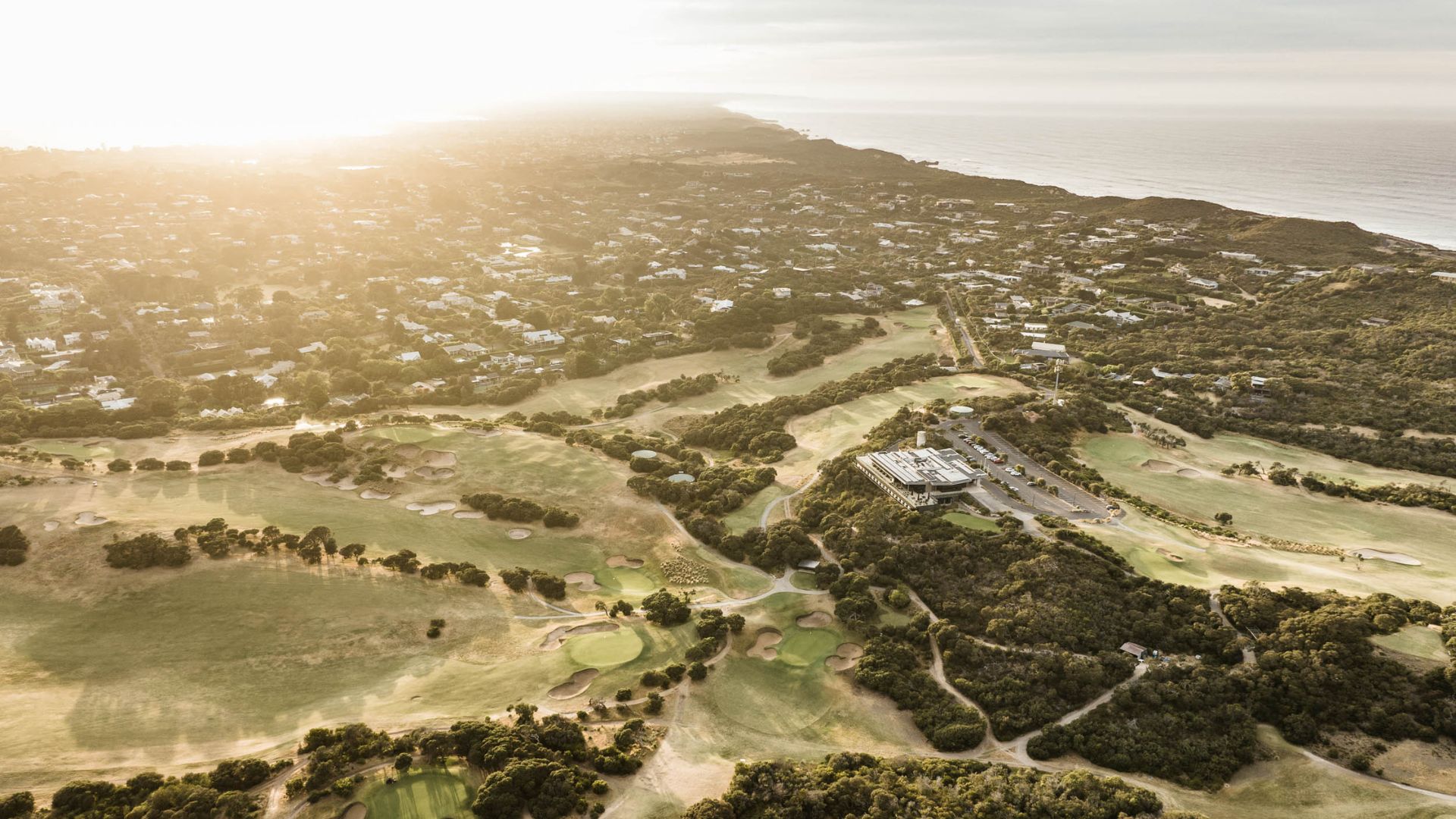
The Tenth
“All the great holes in the world are the twitchy ones.”
– Nick Faldo
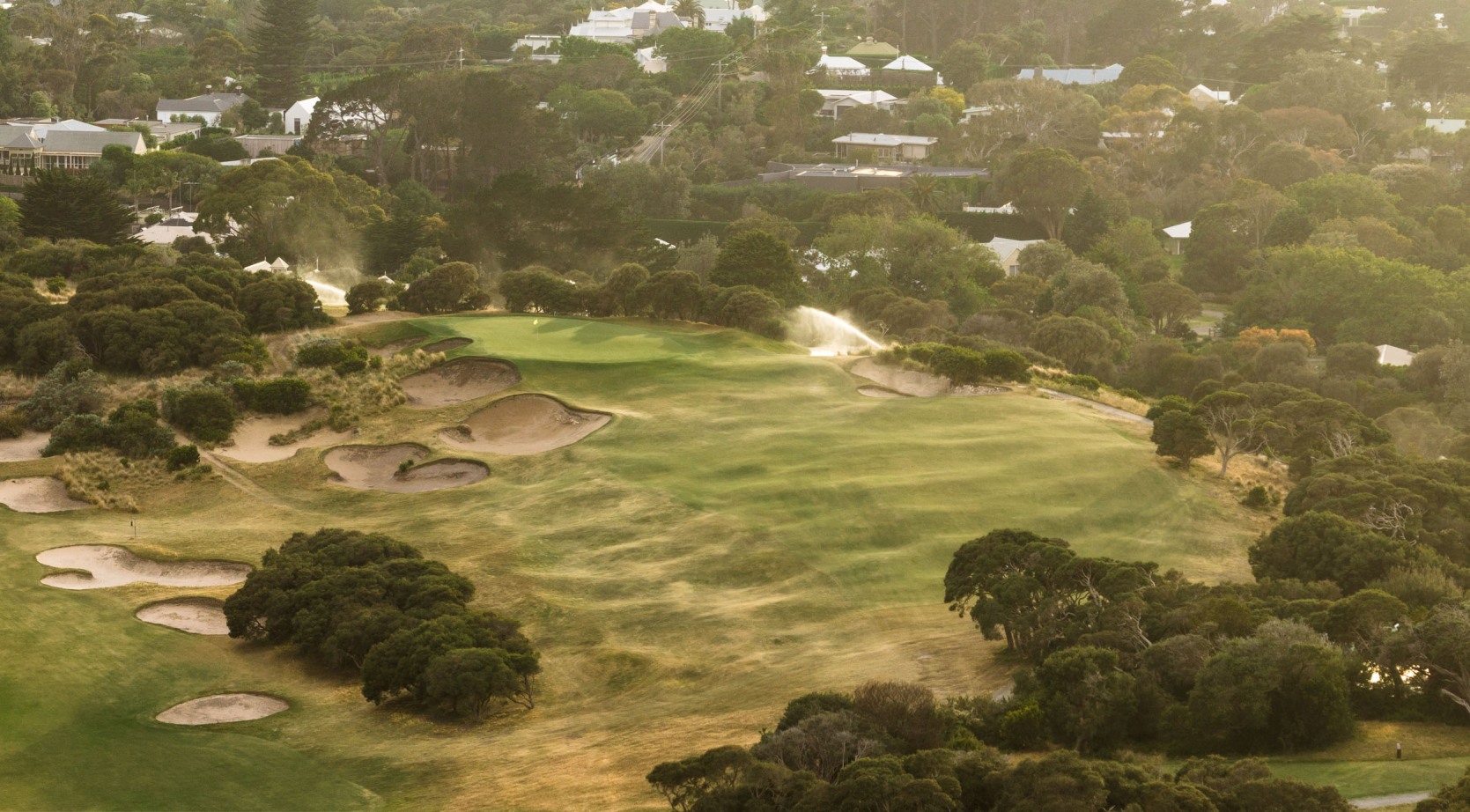
The writer has a personal bias here but thinks this is one of the best and most vexing short par 4s in the country. There is a bit of Royal Melbourne’s 10th hole to it with the wide fairway to the right and a fearsome bunker threatening anyone driving at the green and hooking left.
The original was quite a bad hole. The green was blind from the tee with the view blocked by several big, old cypress trees short and left of the line to the green. There were no bunkers, making the tee shot a free hit at the green with almost no consequences for the reckless or the crooked. For the short hitters the fairway sloped from high on the right to low on the left, and with no level spot the ball inevitably finished up at the bottom left edge of the hole.
The new hole addressed all the problems. The trees came down, the high point of the fairway on the right was levelled out to make a realistic lay-up section which would hold the ball and allow for a clear view of the surface of the green. Finally, bunkers were added – one on the right just where you want to drive, and a nest on the left to threaten the tee shot and encourage the sensible player to hit safely away to the right.
Like all the best short 4s in Melbourne, they give you a four if you play safely, sensibly and with a reasonable degree of competence. To make a birdie you must hit at least one excellent shot and the braver the drive the easier the pitch. Conversely, the safer you play with the first shot the more the requirement of the second.
And the only way to make a five is to set off in search of a three.
The Eleventh
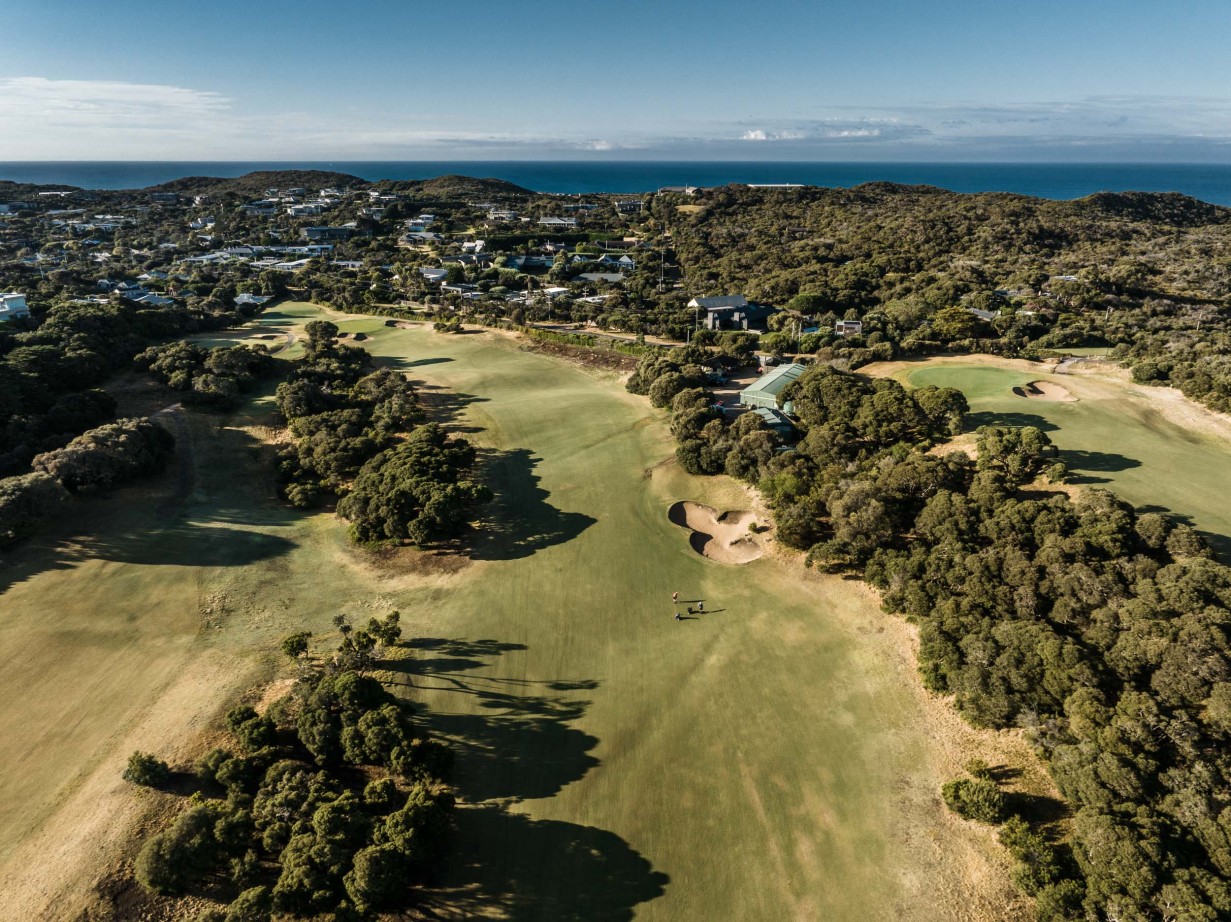
A hole that best characterises golf at Portsea. A par 5, but one easily reachable for the longest hitters, it plays over a piece of sandy land that moves in a multitude of directions – down, up, across from right to left, up, down, across from left to right and then up again to the green – from tee to green.
Of interest is where Grant built the bunker and when he built it. It was perfectly positioned for the drives of the better players back in the early 1990s, when most still played with a balata covered golf ball and steel-shafted, persimmon-headed driver.
Greg Norman was the longest driver in the country, averaging around 260 metres, and the bunker was perfectly positioned to get the attention of the best players of the time.
Now, if you average 285 yards off the tee, you’re ahead of almost no-one and a handful of players on the LPGA drive further.
When Tom Doak, the American architect, was rebuilding the Tour course in Houston and Brooks Koepka was the “Player Consultant”, Doak asked him how far away he should build the fairway bunkers.
“I don’t care where you put them, I’ll get over them – and if you put them so far out that I can’t carry them, I’ll hit a three wood off the tee and still have a wedge in.”
Portsea has relatively few fairway bunkers (the one left on the first hole was a greenside bunker that no-one bothered to fill in when the green was moved back). The 1st, 3rd, 4th, 6th, 11th and 14th holes are the only ones with drive bunkers. Given how interesting the land is, the restraint is admirable.
The Twelfth
“Often it is necessary to get from one section to another over ground which is not suited to the easiest construction, but that troublesome hole must be made to stand right up in meeting with the others, and if it has not got anything about it that might make it respectable, it has got to have quality knocked into it until it can hold its head up in polite society.”
– A.W.Tillinghast
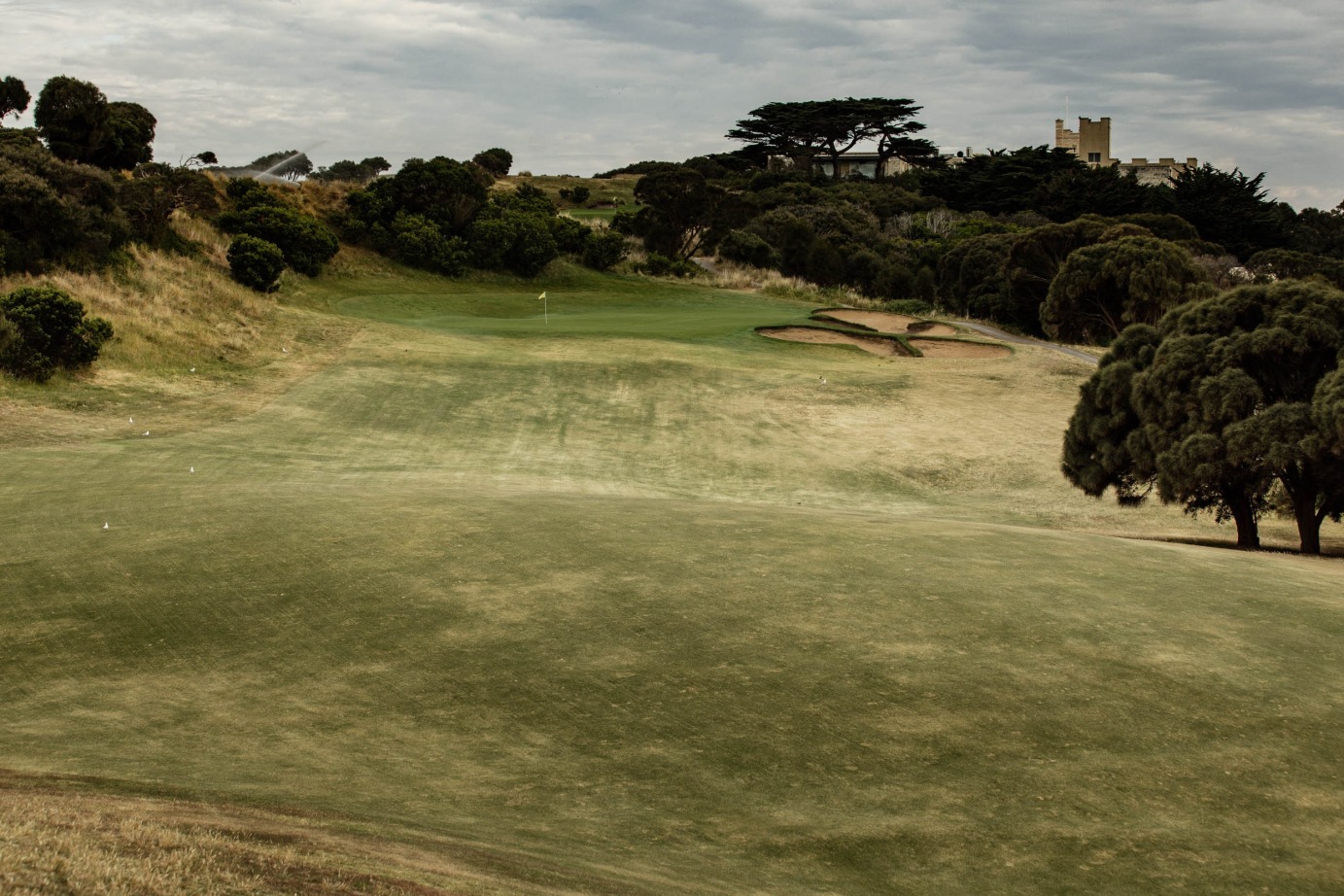
Perhaps the most thrilling shot on the 12th is the long second from the top of the hill. It’s a pity more don’t get to play from up there, but there’s no hope of putting a tee far enough back to make it possible. Although if you were looking for some late-evening fun you could try it from the tee on the 19th hole – so long as you’re certain of not slicing into the houses to the right.
The 1970s hole played along the boundary fence with open paddocks on the other side running all the way up to what’s now Delgany land.
Boundaries can be both threatening and worthwhile hazards – see the great 14th, 16th and 17th holes at St Andrews. But the land was sold for houses, necessitating the tee, fairway and green moving far to the left. It was a pity, but closing the original 15th hole (the par 3 up the hill) meant the tee could move back and it made for an improved tee shot and a longer hole.
The Thirteenth
“We are planning and building not to penalise very poor strokes, but rather those which are nearly good.”
– Bobby Jones.
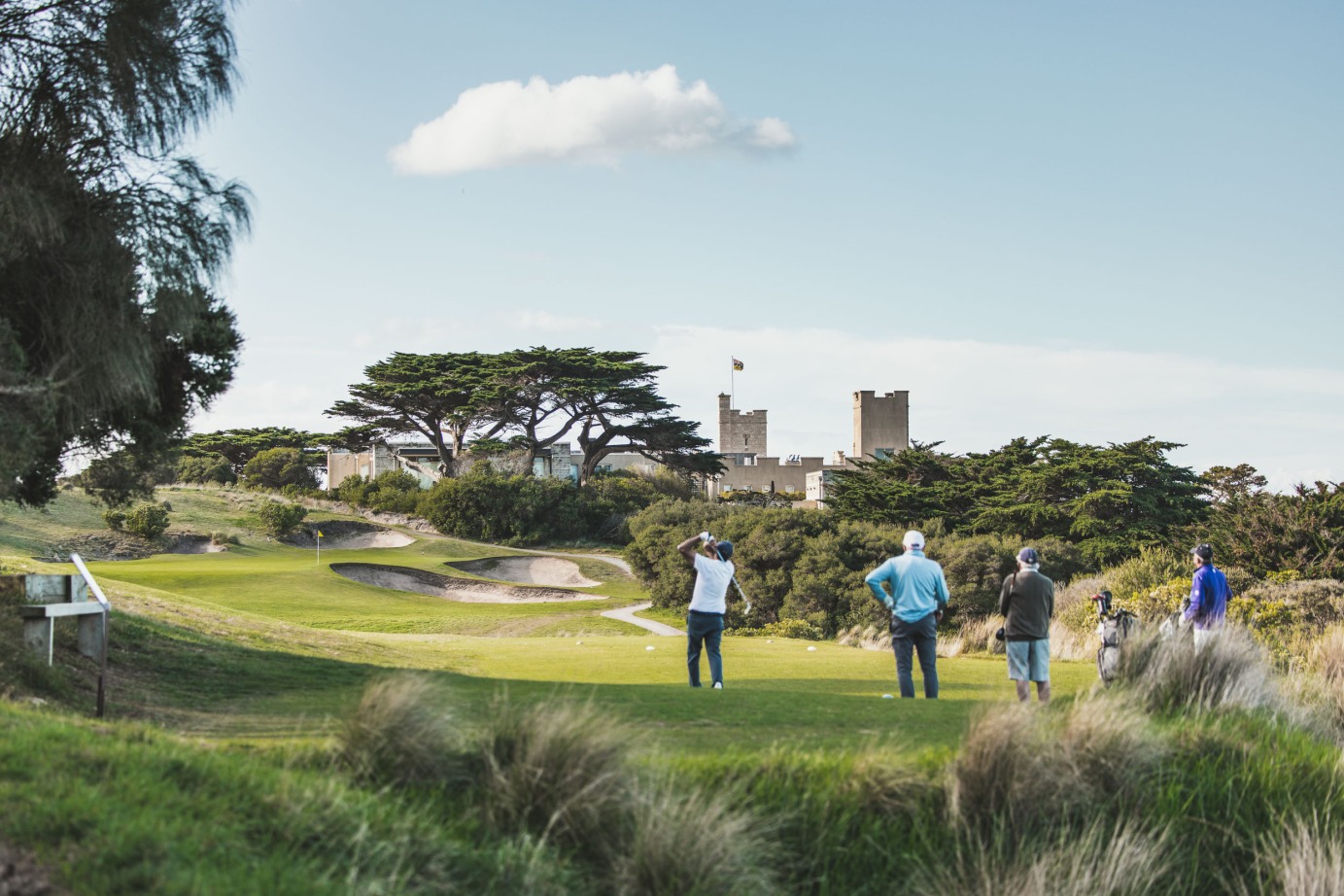
On the ‘old course’ the previous hole was the 16th and the original 17th tee (the hole playing down to the current 14th green) was short and right of the current 13th green. (Got it!)
It was a terrible tee shot where you played safely to the right or hit a high draw up and over the cypress trees on the left – the same copse of trees left of the current 10th green.
The next version saw the tee move to the right and onto what is now the 13th green, and it was noticeably improved.
The problem with the par 4s on old back nine (current 5, 6, 10, 12, 14) was each was a drive and a short iron.
Bruce Grant, John Sloan and I suggested moving the 17th tee (now 14) back to add some much-needed length to the par 4s and connecting the 16th green and 17th tee with a new par 3 – a hole that replaced the original, uphill par 3 played after the current 11th.
The concept of the new par 3 followed the principle of the 12th at Augusta and, closer to home, the 11th hole at Yarra Yarra.
The green is orientated from left to right and the further right you play the longer the carry. For right-hander’s, shots missed to the right usually fly shorter. The opposite applies to the “left shot”, and the pulled iron almost always flies further which brings the back bunker into play.
The Fourteenth
“The middle of the fairway – except for perhaps once a round for the sake of variety – should never be the true line to the hole.”
– Tom Simpson
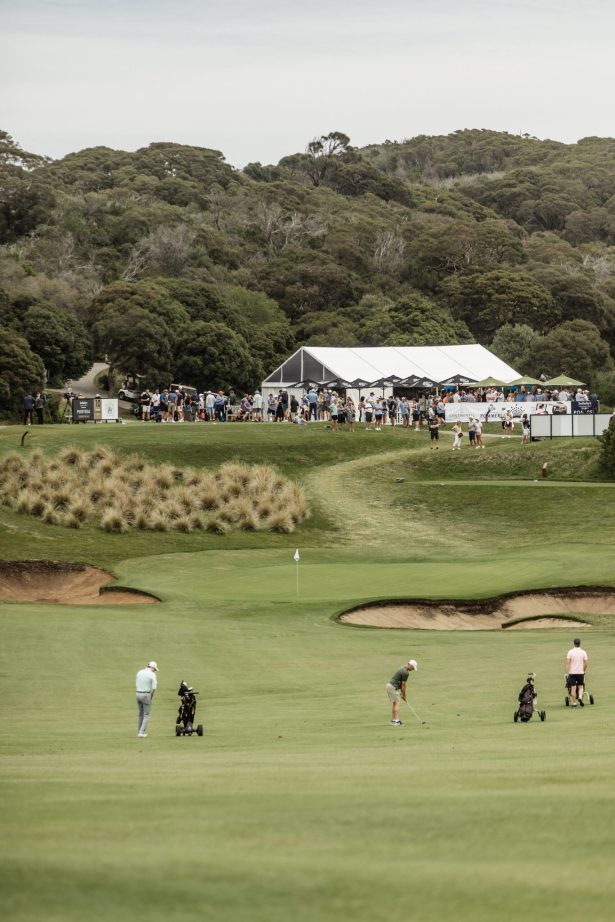
Blind tee shots aren’t always popular, but the best ones have no surprises on the “other side” and set up fine second shots. The 8th and 16th holes at Kingston Heath are good examples, and Portsea’s 14th does it as well as any hole in the country.
The green is small and suited to the original short par 4, but it makes for a demanding second shot down the hill and the bunker on the right catches even the slightest of mishit irons.
From one of the poorer holes on the course in the early 1970s it’s now one of the best, and not simply because it’s difficult and despite the blind tee shot.
The Fifteenth
“Unless we provide golf courses full of intricate problems, players will get sick of the game without knowing why they have got sick of it, and golf will die from lack of abiding and increasing knowledge.”
– Alister Mackenzie
One of the consequences of the new clubhouse location and the subsequent re-routing of the course was four of the original five starting holes became the quartet of finishing holes. Their variety and quality make for not only a great finish but one of the finest second nine holes of golf in the country.
The 15th is one of a long line of great short par 4s in Victoria. With so many on the Sandbelt they earn the most attention but Portsea’s 10th and 15th are worthy of equal praise, alongside other classy examples on the Peninsula including the 2nd holes at St Andrews Beach and The National’s Gunnamatta Course.
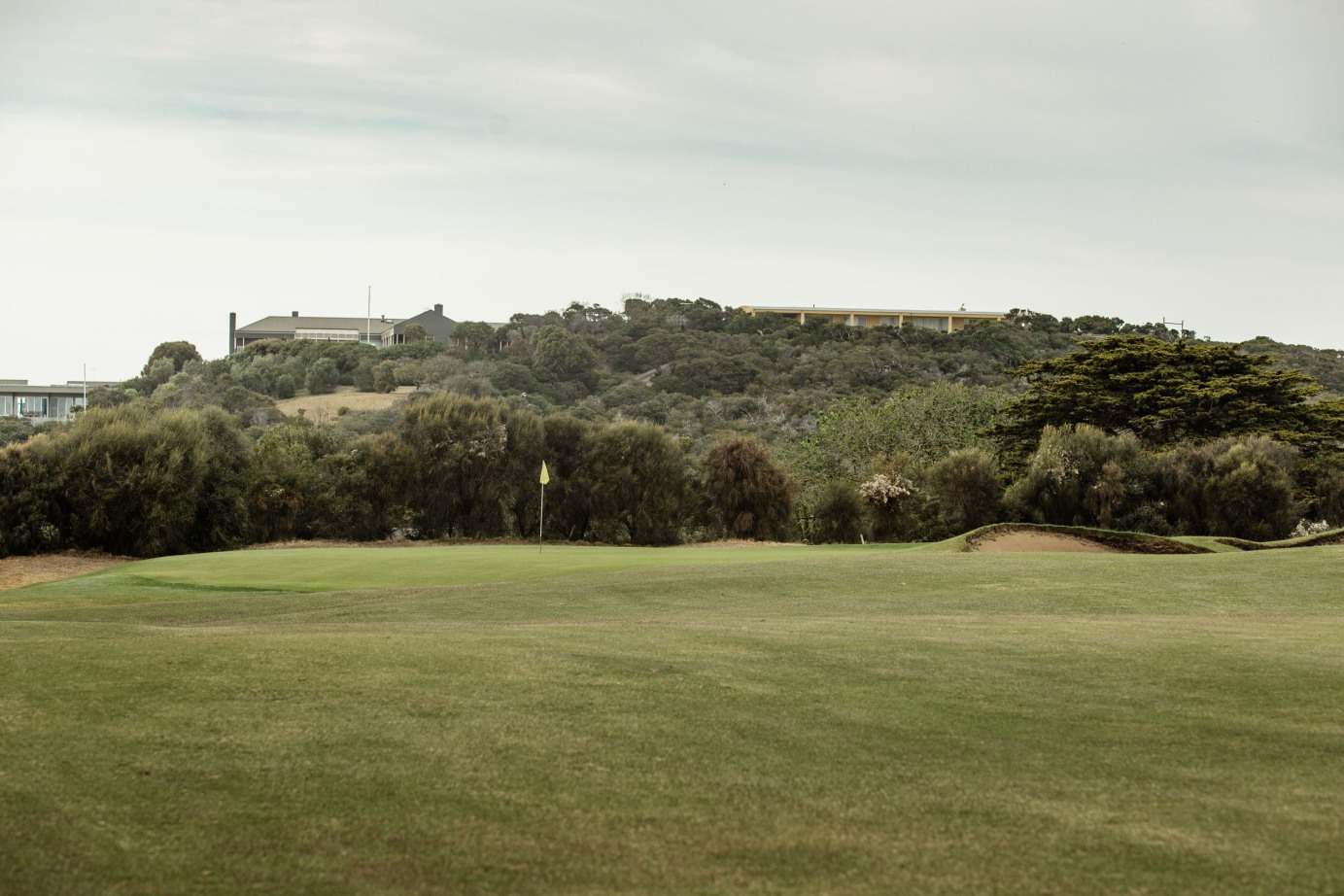
The further along the fairway you drive the narrower the target becomes. Hooking left and down the hill is a guarantee of trouble and, likely, a bogey – or worse.
The feature of the green is the “false-side” that sweeps shots just slightly left of the middle of the green back down to the front left corner.
The Sixteenth
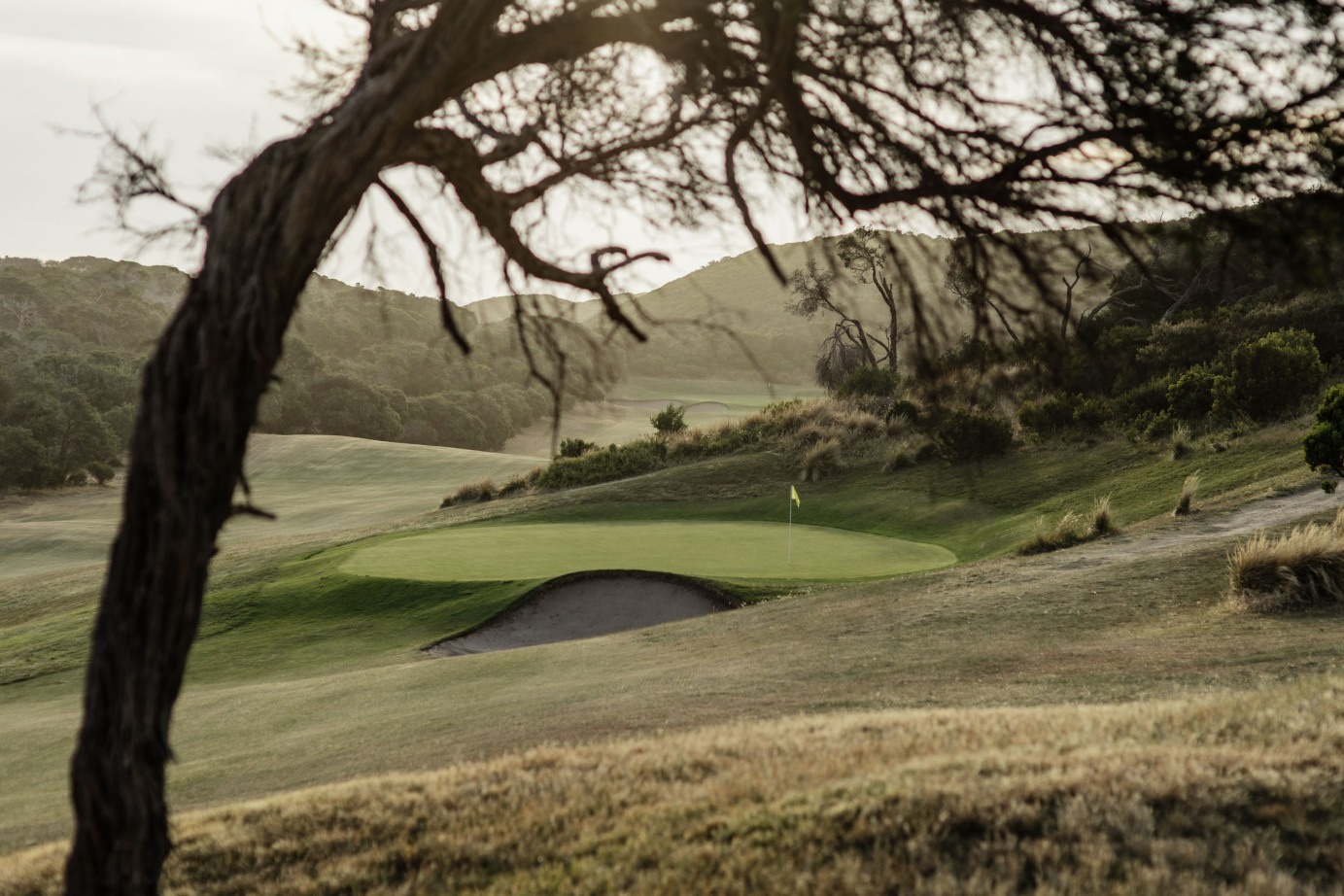
Instinctively golfers like downhill par threes. The mid-length 16th is defended by a bunker at the front and a steep bank on the left, sending all player an obvious “don’t dare hook it” warning.
The right side isn’t defended at all – indeed there is the likelihood all but the widest of right shots will kick hard to the left and down onto the green.
The irony of this hole is that playing from the women’s 16th tee to the 17th green makes a great par 4 – an even better hole than the current 17th because the dune on the left is the perfect carry distance from the longer tee.
The Seventeenth
“The relationship between the properly placed shot to the fairway and the following one to the green is the real standard of measuring the merit of any course.”
– Bobby Jones.
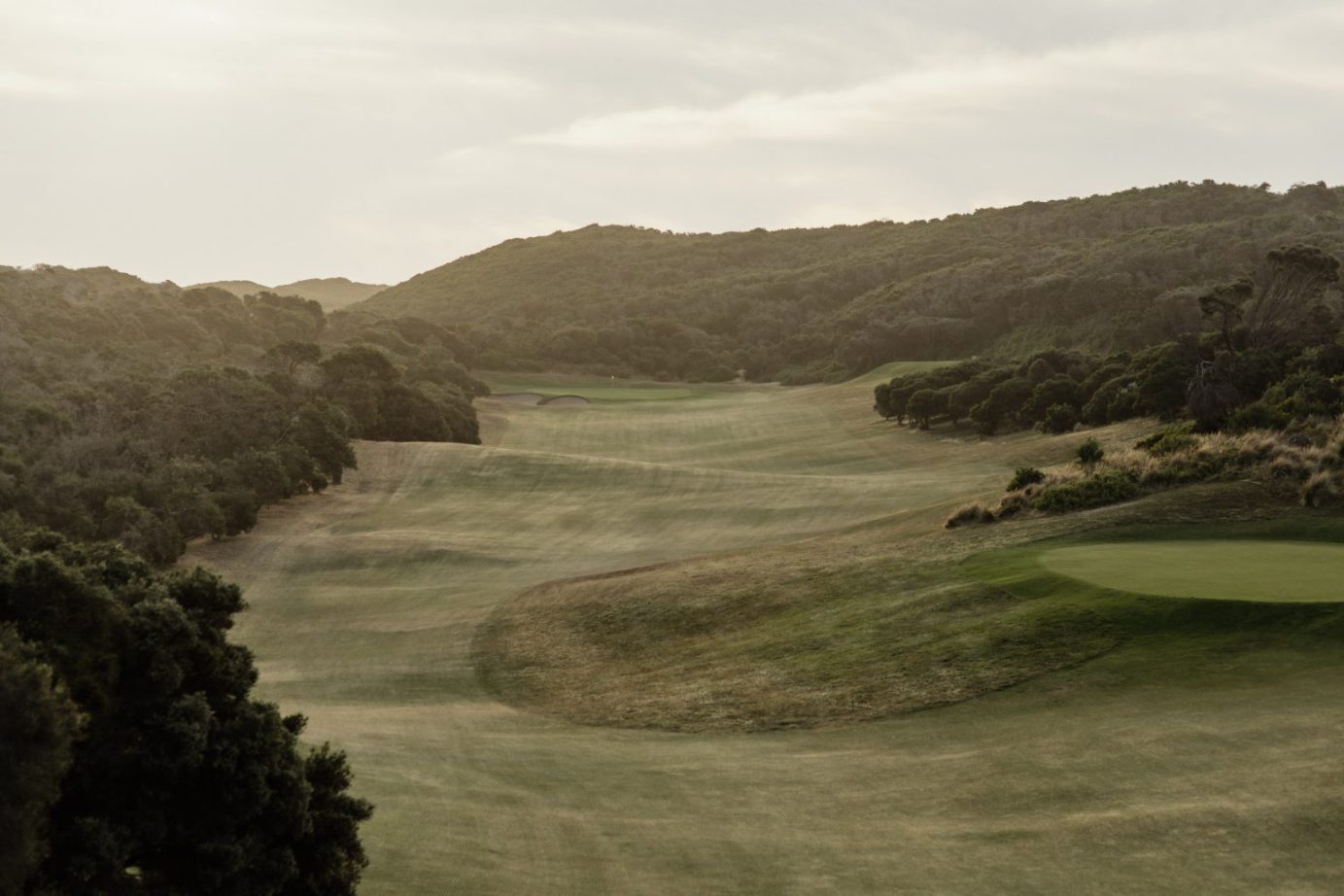
The old 4th hole is one of the best par 4s and an example of a well-used boundary fence adding to the strategy. A brave drive down the boundary line earns a kick off the downside of the dune and a shorter shot to the green. It’s easy to bail away to the right, but inevitably it adds at least an extra club, or more, to the approach shot.
The green is subtle but brilliantly defended. A single bunker guards the left, and less obvious but no less worthwhile is the bump on the right side of the green, making short shots from the right both more onerous and more interesting than they otherwise would be.
The Eighteenth
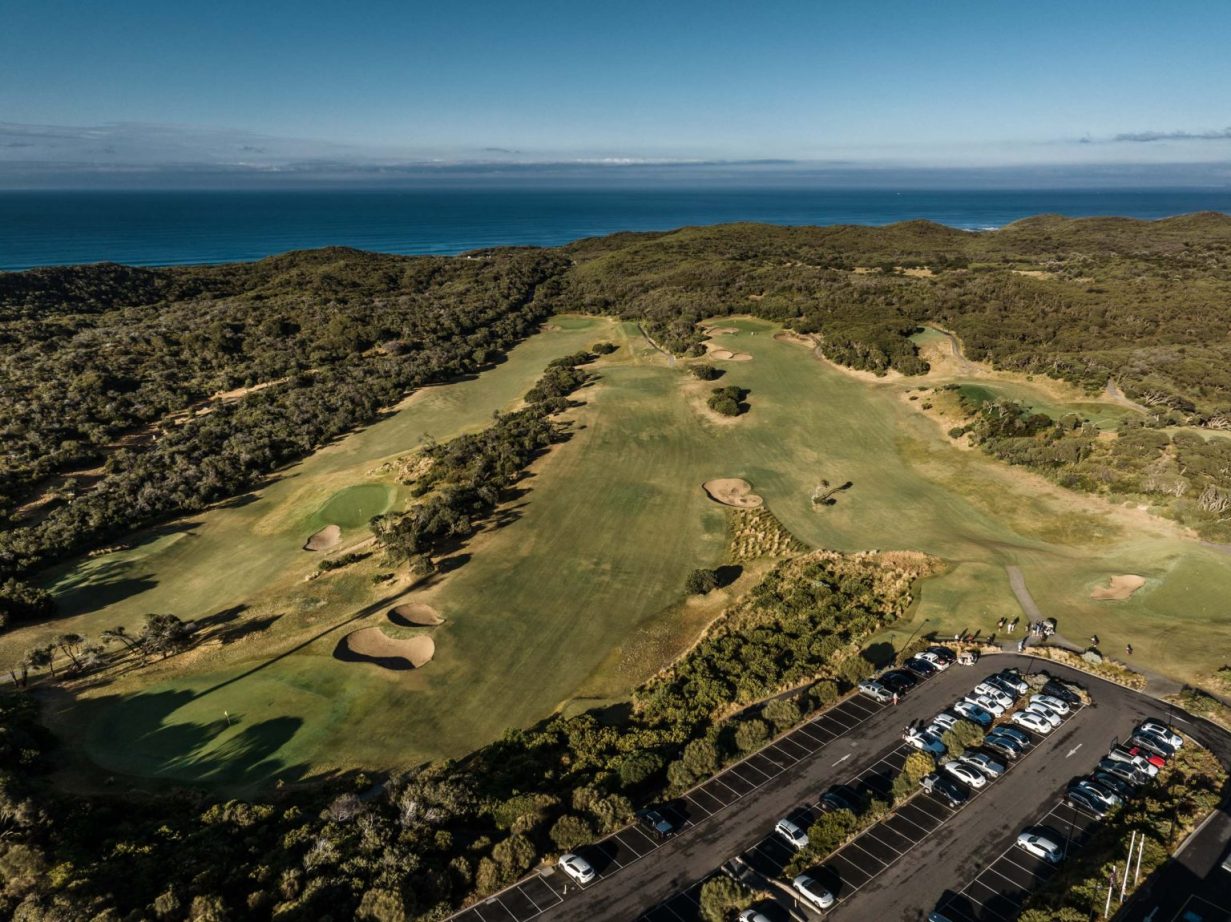
This was the old 5th hole and was always a good one, but on the “new course” it became the finisher by dint of where the clubhouse happened to be and not any routing choice.
Many times the 5th hole wouldn’t make an ideal or memorable 18th, but this one makes for a brilliant and interesting finish that asks for two fine shots.
Blind holes and blind shots are features of golf by the sea, but it’s unusual to find a good hole where both shots are blind.
This is one example, and it makes an unusual yet perfect finish to the round. Once again, the tee shot needs to reach the top of the hill to earn the extra 50 metres of run down the hill that brings the green within reach.
The surface of the green is hidden behind the bunkers embedded into the ridge at the front of the green, necessitating an aerial approach to reach the green. A touch too far to the right and inevitably the shot is swept away by the edges of the green tipping to the right.
It’s a demanding shot and a suitably exhilarating finish to a round on a course filled with fun.