
The Early Clubhouses
Clubhouses are a window to a golf club’s soul. Wearing its worst visage, the game can be a snooty beast and the 19th hole a forbidding place. At its best it is a community hub, a veritable celebration of its members in their many shapes, sizes and hues.
In his centenary Foreword, lifelong Portsea lover Mike Clayton hailed the most eclectic membership he has known.
“And at the end of it all, when everyone is back in the clubhouse there are few places in golf you’d rather be.”
It’s hard to imagine a greater endorsement of a club and its people.
When Clayton first played the course in his early teens, Norm and Elma Shaw were the administrators, living in the residence that had been added to the original clubhouse building. At the time of Portsea’s 1926 birth the clubhouse was deemed “temporary”. It stood for 67 years, and despite its humble visage – and seemingly being on death row from day dot – was much-loved.
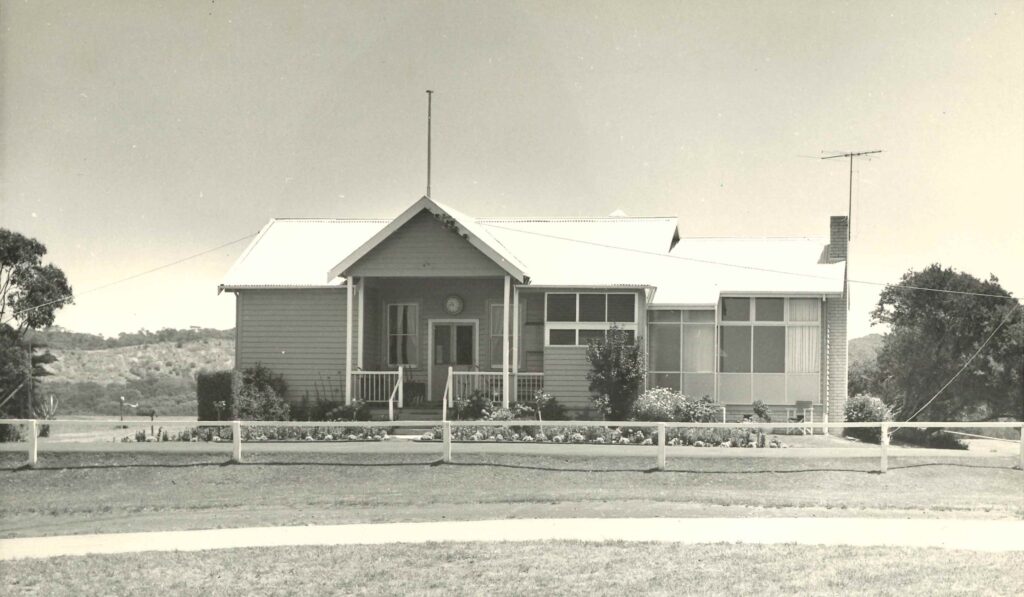
Original Clubhouse – 1926
As life member Norm Mallett says, “It died laughing that house.”
A high water mark of frivolity was reached during the Shaw’s 1966-71 tenure. Norm Shaw Junior was 20 and working for the National Bank in the city when his parents took on the management of the club and moved into the residence. He would come home most weekends and from his bedroom window could peek out to the first tee and, if the coast was clear, grab some clubs and take a Sunday morning stroll down the 1st and back up the 18th.
Norm Jnr has warm memories of the time, centred around “the hubbub and rhythm of a golf club in full swing”. His parents were Scottish migrants who came to Australia in the 1950s, and worked in ‘Upstairs, Downstairs’-like housekeeping roles for the Grimwade family in Toorak, the Robinson’s on the Portsea clifftop and then at the Lord Mayor’s camp before moving to the golf club.
He remembers a modest, character-filled weatherboard building off Relph Avenue, toilets to the left and right of the main entrance, a large common room inside with a small kitchen down the right-hand side. The managers’ accommodation – a modest two-bedroom home with a big fireplace – was accessed through a sliding door to the right.
Many a memorable gathering took place in this humble setting, and the Shaws revelled in being in the middle of it all. In a speech a few years ago while presenting the perpetual Shaw Shield, which is contested by teams representing the Ladies’ President and Captain, Norm Jnr sketched a scene of the time:
“It was not an uncommon sight late on a Sunday afternoon to hear the skirl of Dad’s bagpipes, the clinking of glasses and the smell of fresh oatcakes and shortbread as Dad’s whiskey and Mum’s traditional Scottish baking were consumed in equally enthusiastic proportions by a host of post-golfing guests. Sensory overload in the best possible way!
“On reflection, I think my parents embodied the true spirit, camaraderie and fellowship we all see as an outcome (or reward, if you like) from our emotional investment in this wonderful game.”
Norm Jnr notes that his parents had left the north of Scotland for this brash young country barely a dozen years earlier. They assimilated by throwing themselves into their adopted land and making friends wherever they went. “They just loved company.”
Elma collected green fees from the basic office/kiosk while Norm worked on the course. One night, watering the course he came across a Nun who had passed out. Norm hauled her onto the back of his postie’s bike and ferried her safely home to the Dominican Sisters. His connection with Delgany was strong – he would play his bagpipes at St Mary’s School for the Deaf and the children would feel the instrument’s vibrations and dance.
Sundays were for green fee players, and Norm Senior’s knack for making friends with all and sundry meant his son would often come home to find notable guests socialising in the residence, including Collingwood footballers (the Shaws were Pies fans) alongside members and other golfers. His repartee, delivered in a rich Scottish brogue, never failed to entertain. “Scots are supposed to be canny with their money but Dad had a lot of people drink Scotch with him – and it was always his!”
Norm Junior’s memories include washing his car outside the clubhouse one Saturday afternoon and sensing misadventure was afoot as sirens wailed along Point Nepean Road and helicopters appeared overhead. “Then it came on the radio that the Prime Minister was missing.” Harold Holt had disappeared in the ocean off Cheviot Beach, barely three kilometres away, never to be seen again.
The Shaws are among a long roll call of people who worked in or called the original clubhouse home. Sandy Cunningham and ‘Mrs Sandy’ (local girl Jean Stirling before they married) were the trailblazers, collecting green fees and making afternoon teas for golfers on long summer days. Jack Howard and his sister Sheila lived there for six years before the Shaws, after a 1960 upgrade that cost 3700 pounds.
Bits and pieces were added sporadically, with the women of Portsea often at the heart of improvements. These included marking the 1950 formation of an Associates Committee by installing a secure cupboard and power point and purchasing an electric jug and urn. Four years later a stainless steel sink was added to the basic ladies room; three years later, shelving was made and curtains hung. Right through to its final decade of existence, when carpet tiles were purchased, considerable energy and effort went into making the clubhouse the best it could be.
“It was literally a house – it had been pushed out with an extra room and an office put on,” Mallett recalls. “It was thoroughly entertaining – people responded to the low-key atmosphere and came to enjoy themselves.”
There was no bar as the club didn’t have a liquor licence. Instead, members would bring long necks of beer and put them in the second-hand fridges to be enjoyed after their round. Unless the irrepressible Gordon Beany, who ran the blackboard recording scores of the day, got to them first. “Gordon would ‘look after them’, but they weren’t always there when you finished,” Mallett says. “Especially if you made the mistake of putting Abbott’s Lager in. He didn’t drink anything else – he was brand conscious even then.”
With limited kitchen facilities, food was mostly brought in. Long-time members have fond memories of sitting around tables that groaned with casseroles, salads, cold meats, cakes and whatever culinary creations had been whipped up at home and brought along to share. Fifty-year member John Stam delights in the memory of arriving for an early Pro-Am, car laden with food including late wife Vlasta’s signature crayfish salad. The clubhouse wasn’t showy, but no-one went hungry.
Laurie and Marge Jorgenson replaced the Shaws, then Ted and Yvonne Toole took over. Within A Bull’s Roar records that President Tony Clarke even lived there for several weeks in 1983 and oversaw a roster of members to help collect green fees. As ever, the club managed “with cooperation and goodwill”.
Then came Lawrence and Donna Heraty’s stint. Heraty is an American who caddied successfully for Bob Shearer and now lives in Noosa. In 1984 he got the nod as administrator over more than 100 applicants and remembers the clubhouse and the couple’s time there as utterly blissful. “When the day was done we’d lock the place up, go into our residence or go out and play golf. We loved it. And we loved the people, everything about it. It was one of the great joys of our lives.”
There was an intoxicating simplicity to the place. Heraty recalls “honesty boxes everywhere”, for anything from green fees to tea and coffee. “It was just magical.” Indeed, upgrading to the second clubhouse in 1993 prompted the emergence of what Mallett calls the “reusable teabag”, after some members adopted a BYO bag approach. “We had to charge for tea or coffee but you could always help yourself to hot water.”
To the left of the carpark stood a rudimentary brick barbecue, which groups would congregate around for entire weekends, camping out, lighting a bonfire, perhaps tapping a keg. “Somehow they’d get up and play golf.” The course staff would bring the Heratys firewood and pop in for morning coffee. “The nicest guys in the world.”
The confined space was increasingly challenged as the club and its membership grew. Norm Shaw notes that his parents’ stint coincided with a critical time for the club when many new members came on board, “some who are still shuffling around today”. Like Syd Thomson, who played a significant role in the move to the second of Portsea’s three clubhouses.
A new build had been floated in 1974 but of three proposals the club chose the cheapest (extending). In January 1992, a meeting of members in the Pro-Am marquee featured “spirited discussion” about the proposal; at an extraordinary general meeting on February 8, 1992 a motion passed 386-87 in favour of replacing the “temporary” 1925 clubhouse with a new place to call home.
Thomson, a plumber, was already chairman of the building sub-committee and knew well the constraints on spending. One year he had been given a budget of $400 and told to replace the residence windows (which was achieved, with the help of a carpenter member). He chaired a new clubhouse sub-committee that is a template for bringing the required skillsets to the table and letting them do their thing.
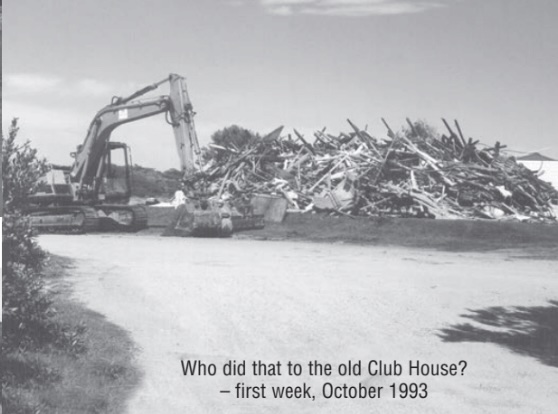
Knocking down the Clubhouse – October 1993
“In all the bits and pieces of committees I’ve worked in, it was the best,” Thomson says. “I had a sub-committee of six – Graham Holdsworth an architect, Alex Sturgess the local building surveyor who was a member, Jack Carr who owned a partitioning business, Peter Jay was a builder, Ted Porter a civil engineer, myself as a plumber. The clever thing about being in charge of a committee is getting the right people. Out of the six of us, I was the dumbest.”
A finance sub-committee, headed by Ian Thomas, was formed to ensure the project was viable. To help fund the venture, members incurred a $600 refundable debenture. This caused some murmurings at the opening when then-President Thomson’s speech included a thank-you to members for their generosity. “Some of the wives didn’t know their husbands had paid an extra $600!”
Another funds-generator was a “lifetime” membership, which could be purchased for $5000 to help finish the build and pay for new furniture and fittings. The club targeted 20 members, and 23 ultimately took up the offer. Existing funds and a fixed-term loan of $500,000 got the project underway and after a relatively seamless build (that included the relocation of the work sheds to their current site near the 11th hole), the project was completed at a cost of $1.2 million.
The first sod was turned on January 28, 1993, and 350 members were on hand 10 months later when Peter Thomson opened the new clubhouse to considerable fanfare on November 27.
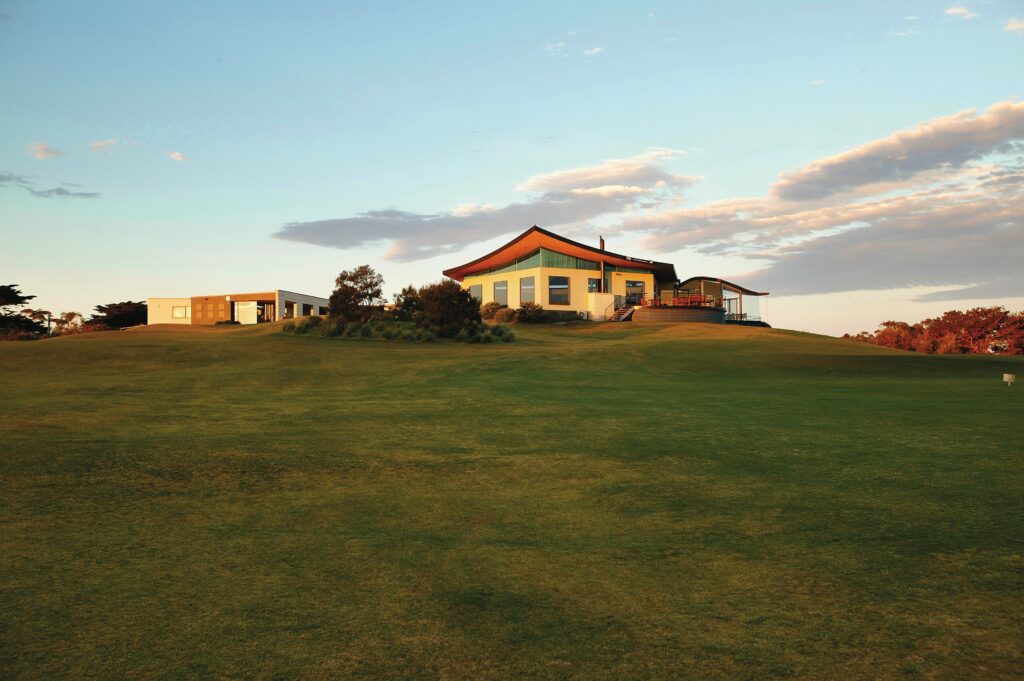
The new clubhouse – finished November 27, 1993
While nothing could replicate the original’s charm, the new building was spacious, eminently functional and well-regarded. The office and committee/meeting room were to the right of the entrance, the bar to the left. A fireplace provided a popular gathering point where many a bottle of red wine was uncorked. A deck overlooked the 1st tee, and the practice putting green sat inside the ‘U’ shape created by the pro shop, toilets and clubhouse.
The ladies were especially pleased with the quantum leap in facilities. Having squeezed themselves into the ladies room in the original clubhouse they were finally blessed with a locker room that contained actual lockers. Sadly, Job’s maxim that the almighty giveth and taketh away came to bear when the historical records of Portsea’s women were lost in the move.
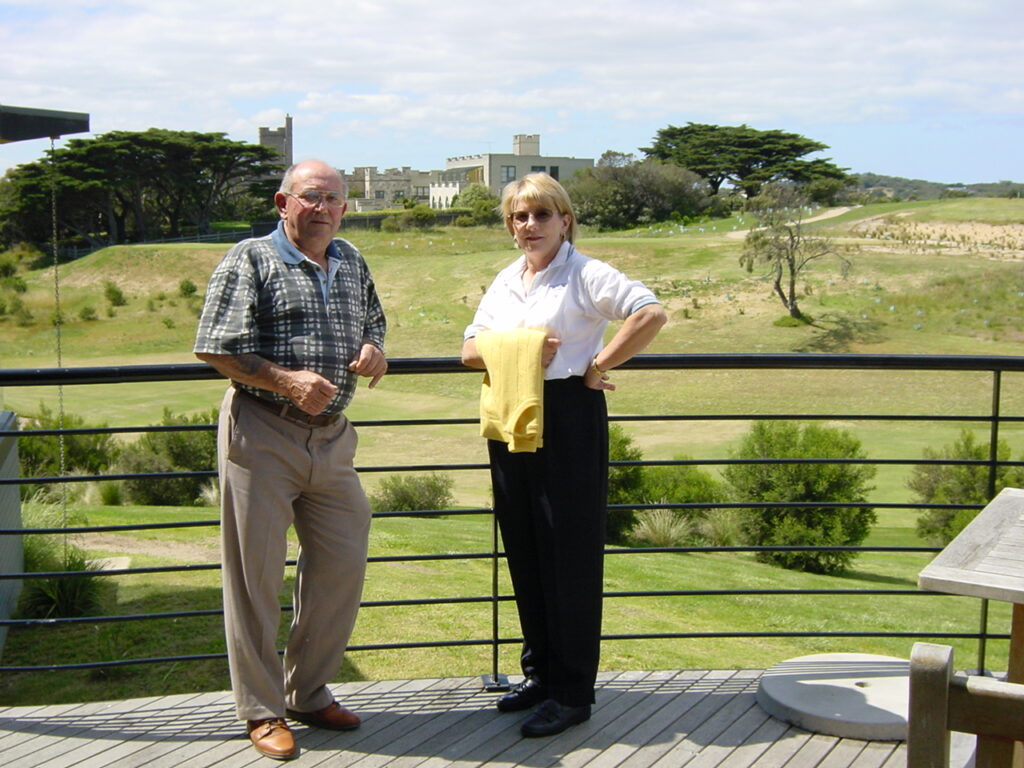
Balcony overlooking 1st tee and 18th fairway
As ever, members threw themselves into the task of making the place feel like home. Thomson recalls working bees where sods of turf were cut from around the course and laid up to new garden beds around the building. Social events became more adventurous in the comfortable surrounds, with happy hours trialled. A Melbourne Cup event for true stayers, featuring breakfast and lunch, was well supported by members.
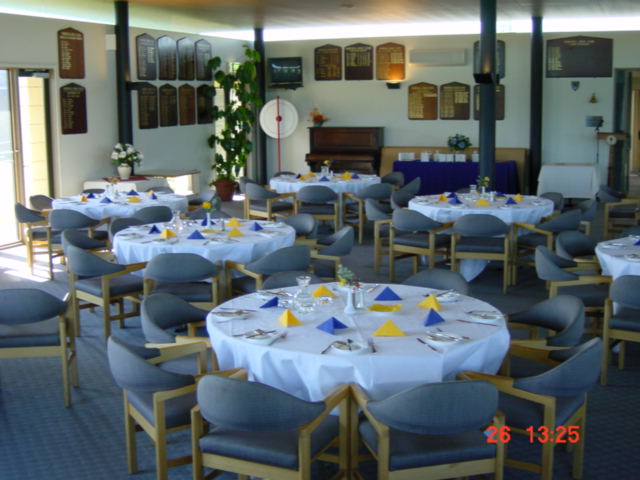
Inside the Clubhouse
The Bull’s Roar reports that proceeds from raffles funded the purchase of a large television, and the popular twilight competition on Friday afternoons was only enhanced by the new setting. A Roaring 20s night in 1998 featured a turn from ‘Young Normy Mallett’ that was worthy of recording in the club’s original history and deserves another run here. “Dressed in trousers he outgrew at about 12 (probably during the 20s) and with braces holding them up, cap on sideways and a bloody old check shirt … he danced all night as though he thought he really was 12.”
For reasons detailed elsewhere in this project, the lifespan of the second clubhouse was short – a few months shy of 20 years. Yet its existence is dotted with the sort of tweaks and improvements that were a virtual constant through its predecessor’s existence, and continue in Portsea’s third clubhouse.
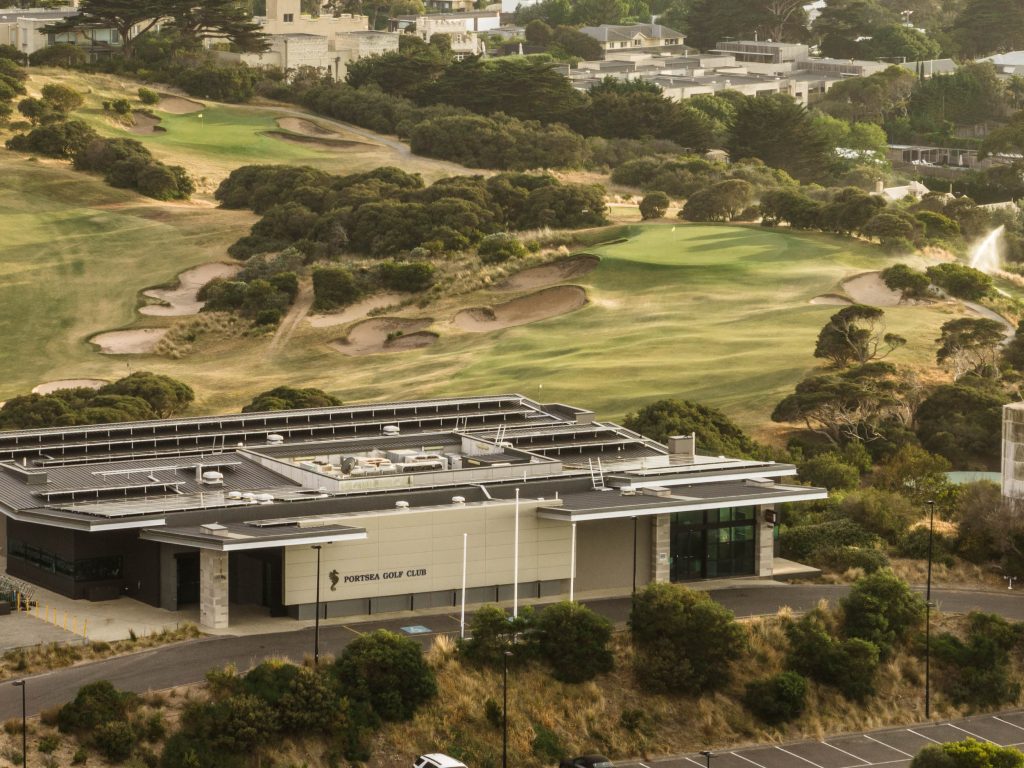
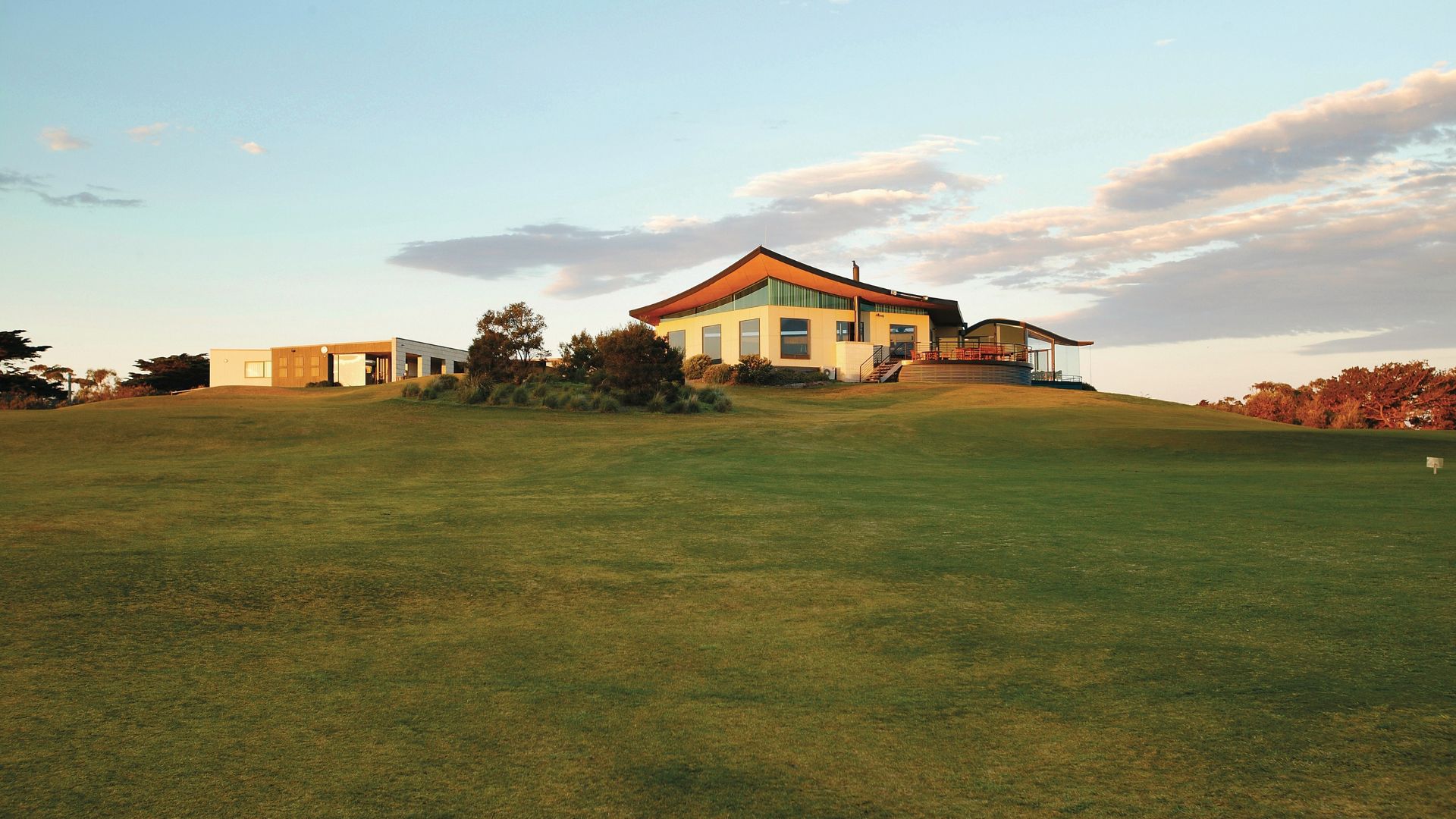
Current Clubhouse – Opened in 2013
“The current clubhouse (opened in 2013) is fantastic for the members and guests of the club, especially when you look at the broader picture of where we’ve come from and how the club membership has grown,” President Steve Blunt says. “Is it perfect? No, but nothing is. And we can make changes and improvements when the circumstance presents itself within the club’s financial capacity.”
On the surface, the clubhouse is an altogether different beast to the two that preceded it. Yet as has been the way since the door first opened to the “temporary” clubhouse a century ago, it’s the people inside who make it.