


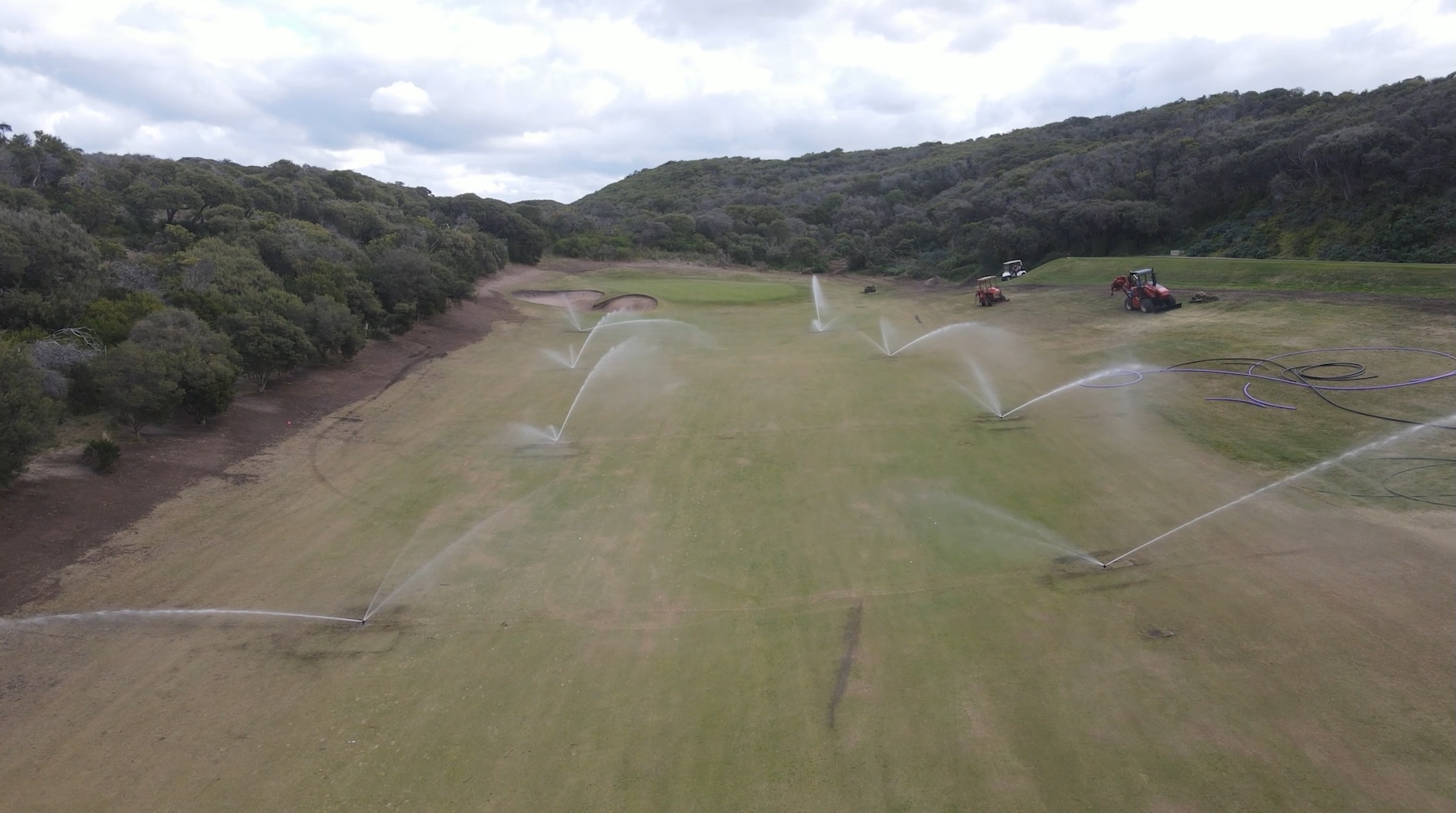
The sailor in Samuel Taylor Coleridge’s poem, who was surrounded by an ocean but didn’t have a drop to drink, knew only too well the conundrum that vexed Portsea for the best part of a century. Ever since water to bed in virgin fairways was drawn from the well at Delgany, having enough of this most vital resource – and ensuring it is of sufficient quality to use on the golf course – has been an ongoing head-scratcher.
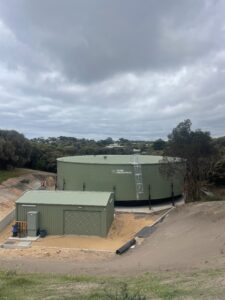
New Water Storage Tank
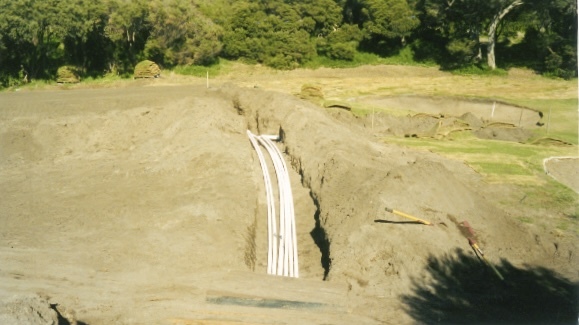
The completion in 2025 of a $3.5 million underground irrigation project was effectively the last piece in a puzzle that has been a century in the making. Mother Nature can claim significant credit for the beauty of the golf course. But presenting it in showroom condition year-round would not be possible without a diverse behind-the-scenes system that features a growing number of bores, a range of storage tanks, reverse osmosis, solar-powered pumps, some serious automated technology that senses when salinity levels are too high, and now more than 30 kilometres of underground piping.
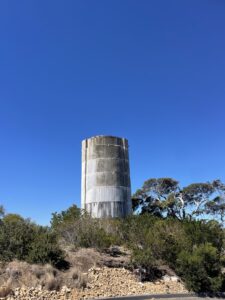
When Brad Harris started work as Bernie Lynch’s apprentice in 1986, the infrastructure for watering was far more basic. There were several concrete tanks where one survives near the clubhouse today, and another alongside the 15th hole that has been superseded by a 250,000-litre metal Rhino tank. “Bores from the 4th, 8th and 11th holes all fed into them,” Harris says.
Greens had pop-up sprinklers, but tees were hand-watered and the fairways relied on an even more laborious system of heavy irrigators on wheels that retracted along a wire. Harris is the last Portsea employee to have been on the night-watering roster, something a young Lynch had done decades earlier.
“My father drove me in at 4am every day, would drop me off then go home to bed,” he says of a chore undertaken on a postie bike, initially in darkness.
 No rain water was able to be captured, and what water the club could access – whether mains or bore – was pumped to the greens and surrounds. “You could only run 10-to-15 (sprinkler) heads at a time, they’d give a 20-minute soak and move on,” Kyle Wilson says. “That’s why there was night watering or early starts.”
Harris describes a watering process that continued until the new system was installed. It demanded “moving” water seven times before it hit the grass – pumped from a production bore to a holding tank, then to the desalination plant, then another holding tank, then the tank farm between the 11th and 15th holes, then a holding tank at the pump shed, then onto the course.
Now, water drawn from bores goes into a 250,000-litre raw water storage tank between the main driveway and 15th hole and from there can either be sent to the 1.4 megalitre fairway tank beside the 11th or gravity-fed to a 50,000-litre production bore tank at the maintenance facility.
It’s here that the magic happens. Water drawn from a bore might enter a reverse osmosis tank with, for example, 7000 parts per million of salts. Anything over 700 is detrimental to bent grass, and can’t be used on greens. Fairways are more forgiving, with the couch grass able to withstand up to 2000 parts per million.
Portsea is increasingly challenged on the salinity front. When Harris worked under Lynch, the bore water they extracted never got beyond about 800 parts of salt. Now, with so many bores in the region, the eastern tip of the peninsula is also the saltiest; for context, Harris says The Dunes – less than 15km away as the crow flies – doesn’t need to desalinate water.
It’s here that reverse osmosis is Portsea’s friend, separating water molecules from other substances in a purification process that renders it fit to nourish a golf course. For decades, Lynch monitored salinity levels in a concrete tank to ensure there was enough for night watering. If the levels were too high, the tank’s contents would need to be “shandied” down with mains water to avoid producing a salty crust on the greens.
“The higher the salt level the longer it takes for the water to be treated,” Wilson says. “We shandy it down to make it more efficient, but it’s a balancing act.”

(From left to right) Brad Harris, Jim Suttie & Bernie Lynch
After treatment, water is stored in an adjacent 130,000-litre tank. When needed, a transfer pump kicks in automatically and moves it to a permeate (fresh or recycled) storage facility at the “tank farm” between the 11th and 15th holes.
The farm includes three 230,000-litre tanks; one waters greens exclusively, another catches rainwater off the clubhouse roof.
Perhaps the greatest technological advance occurs at the 1.4 megalitre fairway tank. A conductivity sensor constantly circulates water that has been drawn from a bore. When it becomes too salty (it is set at 1500 parts per million), a valve automatically opens and the permeate water is flushed through to shandy it down to a level that won’t harm the fairways.
“In the past it used to be guesswork – we’d always be checking bore salinity, trying to estimate how much recycled or mains water we needed to add,” Wilson says. “With excessive dry periods there was no option to water fairways, all the water went on greens and tees.”
Now, it goes on the entire course – quickly and efficiently.
The completion of a “hydraulic tree” allows up to 30 sprinkler heads to be active at one time. Par 4s might have 36 heads on the fairway, while the longest par 5 has 57. Six minutes of watering per “station” equates to two turns of each sprinkler head and delivers 1.5mm of water to the fairway. The longest holes can be watered in less than 12 minutes, before the system automatically shuts off and moves to the next hole.
Wilson’s world of water sits in his pocket. His day starts checking his phone to see that all has run smoothly overnight. It can end setting and tweaking the night’s schedule the same way from the comfort of home, with irrigation infrastructure also accessible via an on-course iPad or the main controller in Wilson’s office.

Kyle Wilson, current superintendent
It’s all a long way from Portsea’s earliest days. The club’s first significant outlay for maintenance equipment was the 40-pound purchase of a horse and dray in 1926. In 1934, AO Barrett used the occasion of the club’s eighth birthday to implore members to help fund a 15,000-gallon concrete water tank, the first major step in Portsea’s water journey.
From Jock Young to Wilson, maintaining an adequate supply of water onto the course has frustrated all who have tended it. Expanding to 18 holes in 1965 was massive for the club. Yet having more golf course to water only increased a seemingly unsolvable problem, particularly when faced with corroding pipes, temperamental pumps, a lack of storage and the ever-present poser of bore water so salty it could ruin grass if not sufficiently diluted.
Bores have been vital but hit and miss. In the `60s one was sunk at the lowest point on the old practice fairway, but at 80 feet the water was so salty Jack Relph wondered if the contractor had tapped into Bass Strait. The piping remained in the ground, and the 400-pound cost was written off. In 1966 a water main was installed on London Bridge Road that the club could tap into. Even after using it to shandy down bore water, the grass still tended to burn.
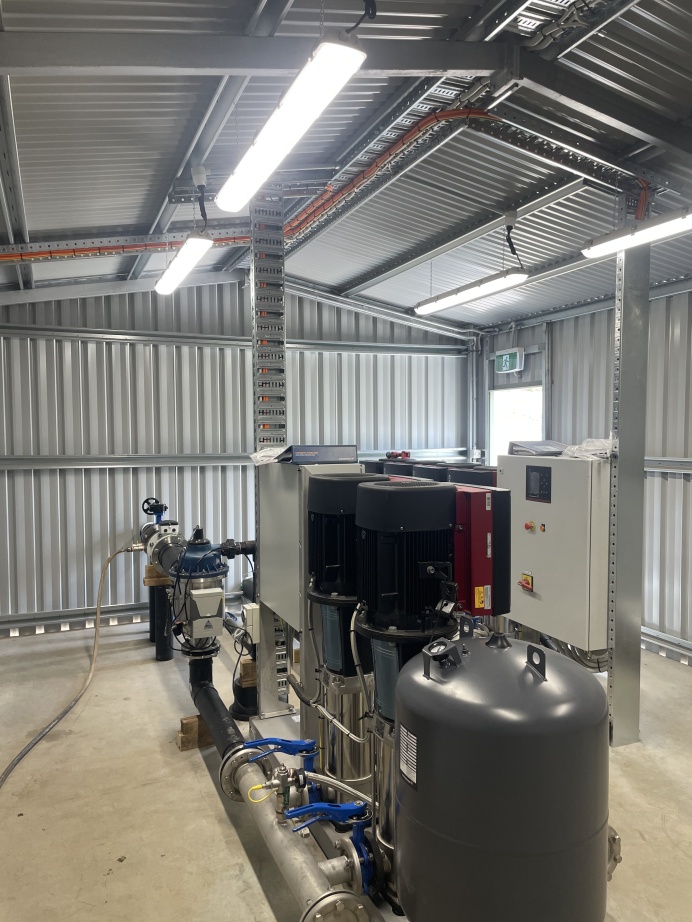
There have been other major investments, including in 1985 when 20 members volunteered to assist with financing a new watering system, with the club also contributing. Victorian Irrigation Supplies was employed at a cost of $110,705 (it would ultimately cost $7000 more) for a set-up that included three new storage tanks and irrigation that could be retro-fitted to existing work connecting the main and branch lines. Two years later, automatic tee watering was added for another $23,150.
Members have always been prepared to tackle the water enigma, which at times has taken them to unexpected places. Neil Pope was chair of the water committee in the early 2000s, alongside Life Member Bob Dunball and geologist Robin George. Gary Woodhams, Bernie Lynch and others have contributed over many years.
Their search for answers prompted a Barwon Heads outing to view a process used on waste water, and they even visited a pig farm near Winchelsea. “I wasn’t aware that pig farms are big on desalinating bore water for pigs,” Pope says. “That’s when we looked at desalination, and ended up putting in the reverse osmosis tanks.”
All manner of potential solutions have been explored. Tapping into an aquifer some 120 metres below the surface of Port Phillip Bay loomed as a possibility that was soon deemed unrealistic, not least due to the considerable issue of getting the water up to the golf course. Another avenue presented itself with the discovery of an old concrete dam that had been built by the army in the national park.
One competition afternoon, Pope and Dunball left their clubs at the 4th tee and set off, Burke and Wills-like, into the scrub and bush to check it out. They eventually found a storage facility that would have been perfect – not least because it was on higher ground and water could have been gravity-fed to the course. There was only one problem: the huge crack running through its middle.
“We slogged our way back down, Norm Mallett saw us in shorts and short sleeves with scratches and blood all over us,” Pope says. “And Norm said, ‘Jesus! Have you two been up in the bush having a blue?’”
In 2013, Captain John Huddle, with members John Nolan, the experienced Robin George and others, analysed the existing water system, reviewed past literature and developed a plan that included improving on-site storage. The investigated the viability of an on-course dam; a site was explored near the 5th tees extending partway up the 5th fairway and into the 6th fairway.
Construction costs and the impact on the course ultimately saw the project shelved. However, their work formed the basis of plans that would flourish almost 10 years later.
Subsequent to this, a small group including Norris, Colliver, George and the newly-minted Captain Paul Kerin refined plans with the help of hydrologist Ben Hall. The 2019 Board submission focused on upgrading desalination capacity, construction of a bore field to tap into lower-salinity ground water, securing additional water licenses, improving waste water techniques and the use of automation. Later, member and former GM Andrew Kelly joined the merry band.
While the pandemic delayed these plans, they were ready and intact for the Board to review, embrace and expedite from 2022.
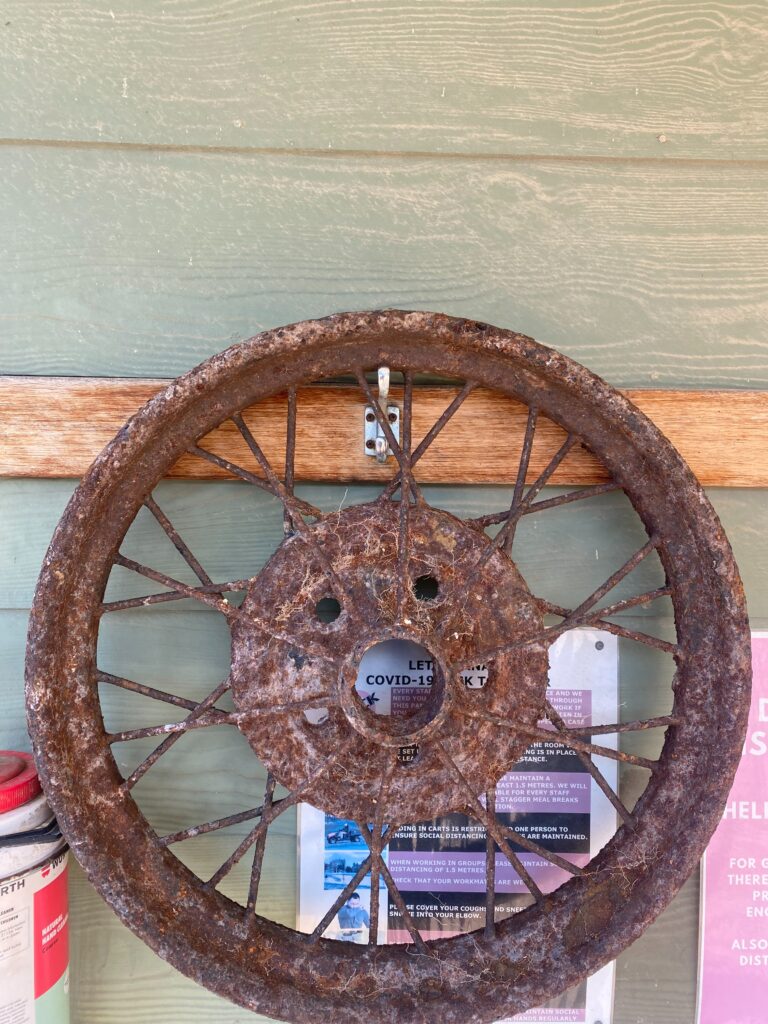
Wheel rim from an old army Jeep
Recent works brought the history of the golf course land to the surface – literally. While underground pipes were being installed on the 4th, 5th and 6th holes in 2025, workers unearthed some long-buried tin. Closer examination found it was the wheel rim of an old army Jeep, a reminder of all has happened on this stretch of land since Arthur Relph began to build a golf course.
From the new ‘Tiger tee’ high above the second hole, the view to the south to Bass Strait and north across Port Phillip Bay is stunning. Between the two sits a golf course that now has all of the necessary infrastructure to thrive.
Not that Wilson is taking anything for granted.
“People say you must be happy, another 12 months you won’t know yourselves. But we’ve still got to have enough water to irrigate. It’s one thing having the infrastructure, we’ve just got to make sure there’s water in the tanks.”
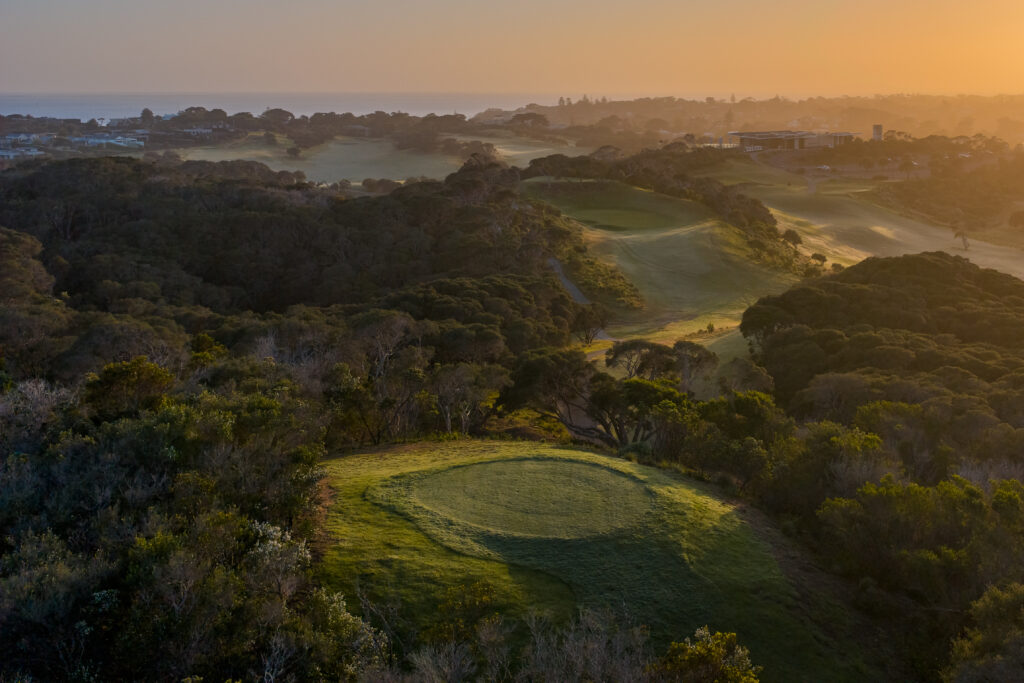
Tiger Tee on the 2nd