
The Big Move
A quarter of a century has passed since Syd Thomson, Pauline Powell and Cheryl Crockett penned Within A Bull’s Roar, their wonderfully informative account of Portsea Golf Club’s first 75 years. For all of the change and growth they charted, the past 25 years has arguably been the most pivotal period in Portsea’s history.
Ever since Arthur Relph went for a post-swim stroll and happened upon the perfect site for a golf course (and a bull), Portsea has faced three consistent challenges: the search for adequate members, money and water. It has been an enduring trifecta as fraught as picking the first three past the post in the Melbourne Cup. Each feeds off the other two – insufficient members made it difficult to generate enough funds to source water to maintain the course at a premium standard, much less invest in enhancing it.
100th birthday health checks don’t usually find the subject in such fine fettle and getting stronger by the day. Members, money and water have never been in such strong supply, a consolidation kicked along by a global post-pandemic surge in golf participation, the installation of an irrigation system, and brave decisions that have brought both much-needed capital and new streams of revenue.
All of this has only been possible thanks to the passion of Portsea’s people.
To the great credit of many, Portsea entered the 21st century ranked 28 in Golf Digest’s annual list of Australia’s best courses. With the new millennium came a state of contentment that Arthur Relph had longed for when he envisaged a golf club housed on a site “from which we could not be driven out”. At the dawn of the 2000s, Relph’s dream was finally realised.
“It was the most significant occurrence in the club’s history,” Life Member Taffy Richards says of the purchase of 67 acres of land abutting Point Nepean National Park and housing nine Portsea holes.
“It guaranteed our future.”
The land had been leased from the Federal Government. When it was handed over to the State Government in 1990 the club’s rent skyrocketed to $26,000 per annum. Decades of efforts to purchase it had stalled in the face of bureaucratic hurdles. When committee members Gerry Kivlighon, Ken Bell and Syd Thomson met with government officials, they were told it was highly unlikely the land would ever be sold.
A Portsea member with Liberal party connections, Tony Gilligan, took up the cause. He had a contact in high places (Minister for Conservation and Land Management, the late Marie Tehan). At length tacit approval for the purchase was granted – initially for $1.3 million, negotiated down to $825,000. The land finally became the property of Portsea Golf Club on September 11, 1999.
“The club purchased the land just before Jeff Kennett lost the (1999) election to Steve Bracks,” Richards says, noting the urgency of the timing. Whether a Labor government would have sold land that was essentially part of a national park to a business will never be known. “It allowed us to make an 18-hole golf course that we know is ours. We could plan without threat of being turfed out. It guaranteed our future.”
Ensuring that future would be a bright one demanded some bold strategic thinking. Without discounting the contribution of its members, the course has always been Portsea’s most tangible asset. But in the early 2000s its allure was being challenged, with the roughly 70 percent of the membership who lived in Melbourne effectively passing 21 golf courses – many of them shiny and new – between Frankston and their club.
“We’re the end of the line,” one long-time member noted. “It was becoming pretty damn hard to get people to, one, sign up to be members and, two, be green fee payers. Especially when they are going past all these new, top-rated courses.”
It became apparent Portsea needed to shake things up or risk being left behind. A new revenue model was required to meet the greatest need of all – money.
Former accountant Keith Coghlan joined the board in 2004 and became Treasurer. New in the post and keen to be fully across the fiscal landscape he arranged to see the club’s bank. “I walked in and said, ‘G’day, I’m Keith Coghlan, I’m the new Treasurer at Portsea Golf Club. I just wanted to introduce myself.’ They sat me down and said, ‘We’re pleased you’re here, because the club is now on credit watch.’”
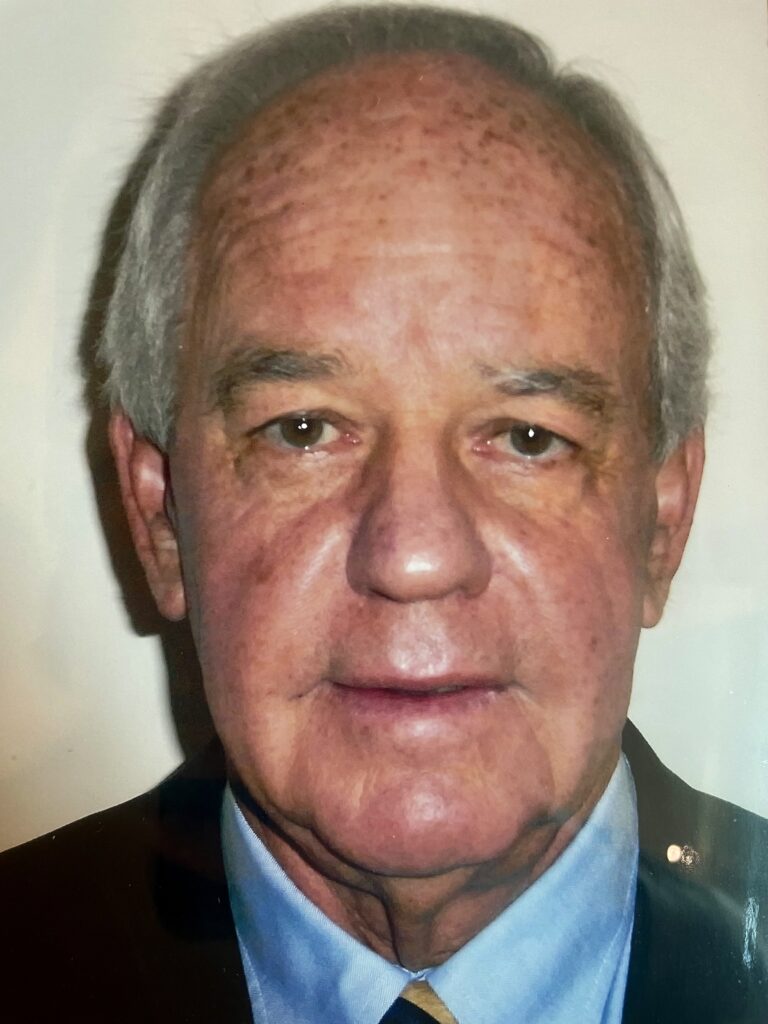
Keith Coghlan
Other than a General Manager, Coghlan remembers very few staff (because the club couldn’t afford them) and board members picking up the slack by doing whatever they could to keep the club going. “If I looked at it now – I didn’t want to back then – the club was insolvent. We couldn’t pay our bills.”
A range of initiatives was tried to arrest the slide, including calling for subscriptions to be paid early to keep cash flowing. An extraordinary general meeting was called and a one-off, $300 levy on top of annual subs was put to and accepted by members. “We had to do something fast and radical, we were on our knees,” Coghlan says.
When occasionally a member would fail to renew due to age or changed circumstances, he recalls thinking to himself, “Please don’t ask for your deposit back!” When they didn’t, those few hundred dollars could be moved from liability to income on the balance sheet.
One day, General Manager Andrew Kelly rang Coghlan and told him a large bill was outstanding. “And we can’t pay it.” Desperate times called for desperate measures; discreetly, two committee members kicked in $50,000 each as loans.
Richards was President from 2002-05 and worked closely with a group of members with a range of skills and connections to chart a way forward. Former state Labor politician Neil Pope was one, Coghlan another, along with Chris Duffy who held the positions of Captain (2004-07) and President (2008-10) and worked in property development. From his service days, Richards recalls a line trotted out by the chief of army personnel: “Where there is no vision, people die.” Duffy ran with the maxim and made it Portsea’s north star.
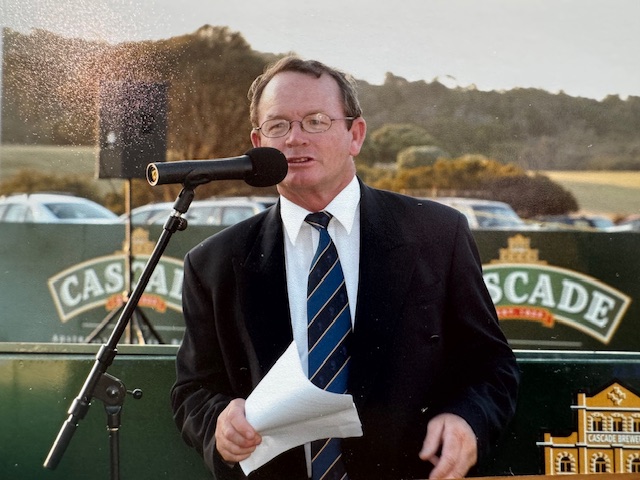
Taffy Richards
One weekend in 2003, he and some mates took a golf trip to Barnbougle with some well-connected industry types who spoke about how few golf clubs in Australia were meeting budget. “Barnbougle’s model had just started, and included accommodation as a revenue stream,” Duffy says. “At Portsea back then, wedding venues were in short supply. The concept of having a wedding venue slash accommodation to supplement your income stream started to be of interest. It just made sense.”
The club’s first professional, Bill Branthwaite, had put the accommodation idea forward in the 1990s, conscious that Portsea was getting a lot of green fee players who were staying at local hotels and they might have been scooping up that bed and breakfast money for themselves. After Duffy’s Tasmania-inspired idea, thought was briefly given to building cabins alongside the 8th fairway.
Another avenue appeared in 2004 that offered a connection to Portsea’s past when Delgany, built by inaugural President Harold Armytage, underwent a redevelopment. For a time Duffy remembers “a red-hot track” of discussions around a partnership that would have seen the main part of the grand building become the Portsea clubhouse.
In the event the risk to the golf club was deemed too high, a simpler arrangement was entered into where people buying Delgany apartments were offered a Portsea membership with transferable playing rights, able to be bequeathed to someone else. “We raised about $300,000 from that,” Coghlan says.
Then an unforeseen way forward presented itself.
“At the end of one board meeting, when we were really in strife, a co-director Geoff Watson came up to me and said, ‘Keith, you do realise that we’ve got some blocks of land?’” Coghlan says. “That was the first time the broader board found out about the land. On came a light – here’s a possible saviour.”
There were 21 blocks in all, the result of a 1926 sub-division, situated south of Relph Avenue. Further examination revealed the clubhouse of the day, in use since 1994, was located on the eastern end of the land, as were the ninth green and practice fairway. This restricted the number of blocks able to be sold. Adding to the conundrum, when the clubhouse was built there was no rule on parking. Inquiries to local council revealed any future clubhouse renovations would incur parking restrictions.
Experts were enlisted, alternatives explored. A redevelopment committee was formed with Richards at the helm, and including Portsea member and former state Labor politician Neil Pope. “Taffy was overseeing, Keith (Coghlan) was the numbers man, Chris (Duffy) was the visionary, Michael Power came on as the (clubhouse) project man, I was the soldier,” Pope says. “I don’t know how many bloody alternatives we looked at. We realised we just had to get an alternative revenue source.”
For a time a “colourful” Melbourne property developer made overtures about bankrolling a new clubhouse for the ages – cut into the hill off the existing eighth hole, six storeys high with a three-level underground carpark. “He had a good architect who kept drawing all these beautiful pictures,” Duffy says.
Design and location would come later. The Board, now under the presidency of Richard Evans, decided the first step was putting the proposal to sell the land in order to fund a new multi-use clubhouse to the membership. At an extraordinary general meeting in September 2006, 83 percent of attendees voted in favour of the sale.
The margin was comprehensive, but the minority who opposed the move made their displeasure known for years to come. Some thought the club’s financial plight had been exaggerated. Others were adamant that land on the peninsula is such a prized asset, under no circumstances should you contemplate “selling the farm”.
“It’s so long ago now it doesn’t matter,” Duffy says of an uncomfortable time for many. “But when you try to convey to people just how much trouble the club was in, and everyone at the time was blithely saying this is just a vanity project for the committee … Really we had no choice, there had to be a land sale of some sort. We had to make that land sale as palatable as possible.”
In the event, progress was slow. Initial planning approval for the new clubhouse and land sub-division to fund it was achieved in May, 2008. Small groups of adjoining owners appealed to VCAT against both, with the club successful at hearings in July and December, and full planning permits issued in August 2008 for the sub-division and February 2009 for the clubhouse build.
A necessary exercise demanded $1 million in legal fees; fortunately significant land sales had already been achieved. Coghlan remembers navigating a host of “ridiculous conditions”, including submitting a plan to council detailing where tables and chairs would be located in the clubhouse, with no scope to move them. Using a public address system was also initially off-limits, which would have made introducing golfers on the Pro-Am tee challenging.
Council permission included putting another road through to the south of the blocks, below Relph Avenue, to be called Brook Crescent. The land went on the market. The Global Financial Crisis bit hard and not a block was sold. As the fiscal climate recovered, a shift in thinking did away with the new road and opted to sell double instead of single blocks. The land began to shift.
Still there were unforeseen speed bumps. In 2010, mid-GFC, Duffy had a business in Queensland that desperately needed attention. He rang Coghlan and said, “Good news Keith – I’m outta here!” Coghlan’s response was, “Can I come too?” Duffy handed over the presidency to Coghlan.
Power’s role overseeing the project was important and played to considerable strengths. An engineer with a host of major projects under his belt, he was in charge of infrastructure at the 2006 Melbourne Commonwealth Games (full title – Director of Operations at the Office of Commonwealth Games Coordination).
Pope remembers Power coming to a board meeting after the GFC had effectively thrown tacks under the project’s tyres and reporting that their building permit was about to expire. At the time only two blocks had been sold. Power recommended they start building lest the opportunity be lost. “We bit the bullet, went to the bank and said we wanted to start.”
The ‘Portsea Golf Club Submission For Finance’, compiled by Ernst & Young, is dated September 2011. It was drafted just weeks before another “hiccup” that could easily have been a tragedy. Pope was elected club President on October 11, 2011. On October 26, he and wife Jenny were struck by a speeding car while crossing Toorak Road. During a long and painful convalescence, he was visited in hospital by former Labor leader Simon Crean and offered the job of Norfolk Island administrator once he’d recovered.
“And so I’m the shortest-term president this club has had,” Pope laughs. “The first meeting I chaired was in January, and I said I was going.”
Paul Cannon stepped up to replace him, bringing significant business acumen as the CEO of a global retail, wholesale and ecommerce company with 3500 staff and offices around the world. Duffy asked him to join the finance and strategic planning committees. By then the clubhouse project was in the tendering stage and Cannon helped negotiate an agreement that would see the world-renowned Accor Group manage the accommodation and function components of the new clubhouse under the Mercure brand.
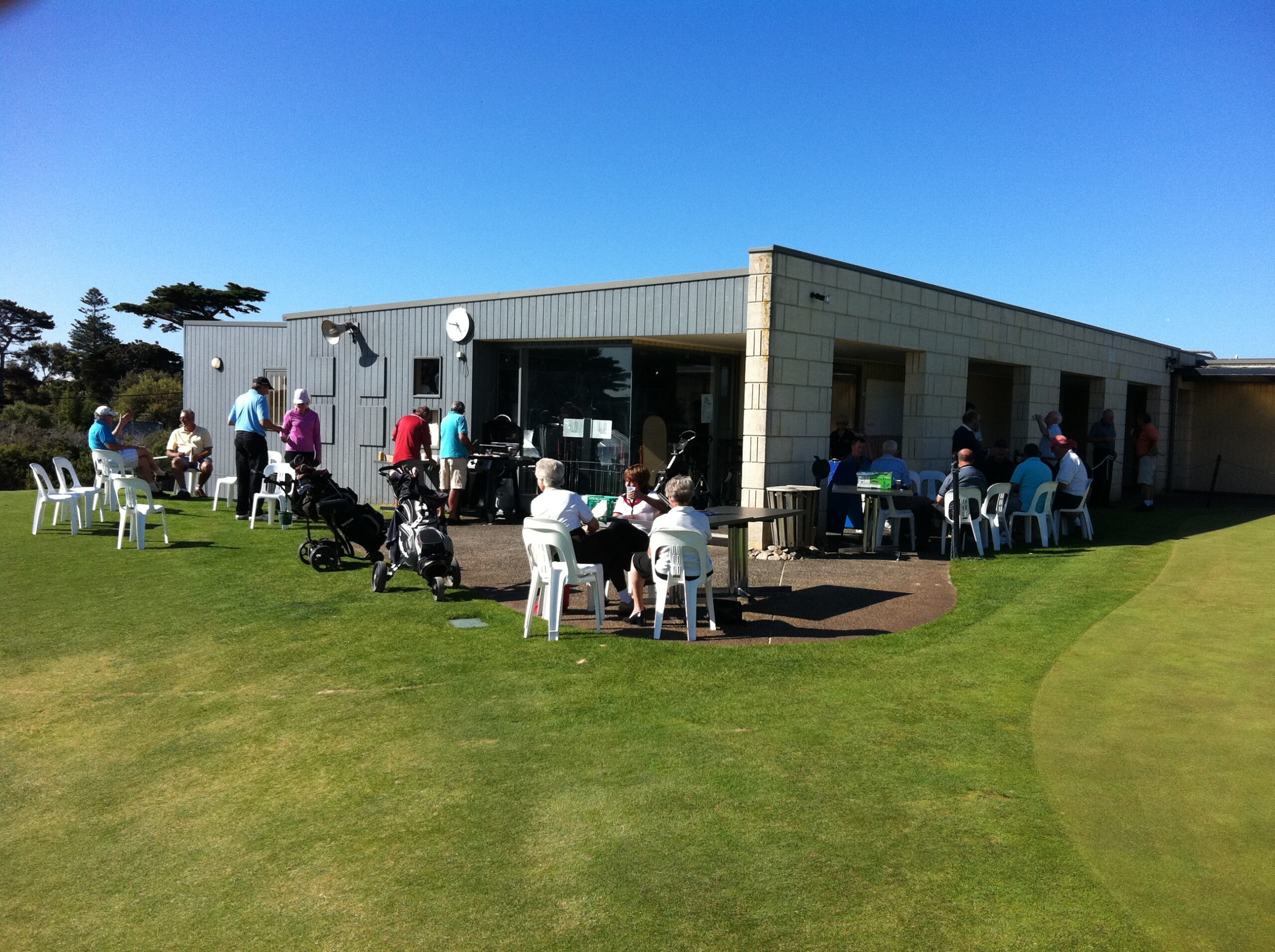
The building was designed by Perrott Lyon Mathieson, an understated two-storey structure making the most of an elevated location with stunning views to the north across Port Phillip Bay. Golf operations and function rooms were situated on the upper level, with the golf locker rooms and 24 accommodation rooms of 4.5 star standard downstairs.
The Ernst & Young analysis produced a business plan that Coghlan regards as “a really good historical document”. It states that in the year ending 2010 the Mornington Peninsula received an estimated 2.7 million domestic visitor nights, with golfers staying an average of 4.1 nights. Rates for occupancy increased the further you travelled from Melbourne; the peninsula wedding market was extremely healthy, but Portsea Hotel was turning away as many wedding receptions as it conducted.
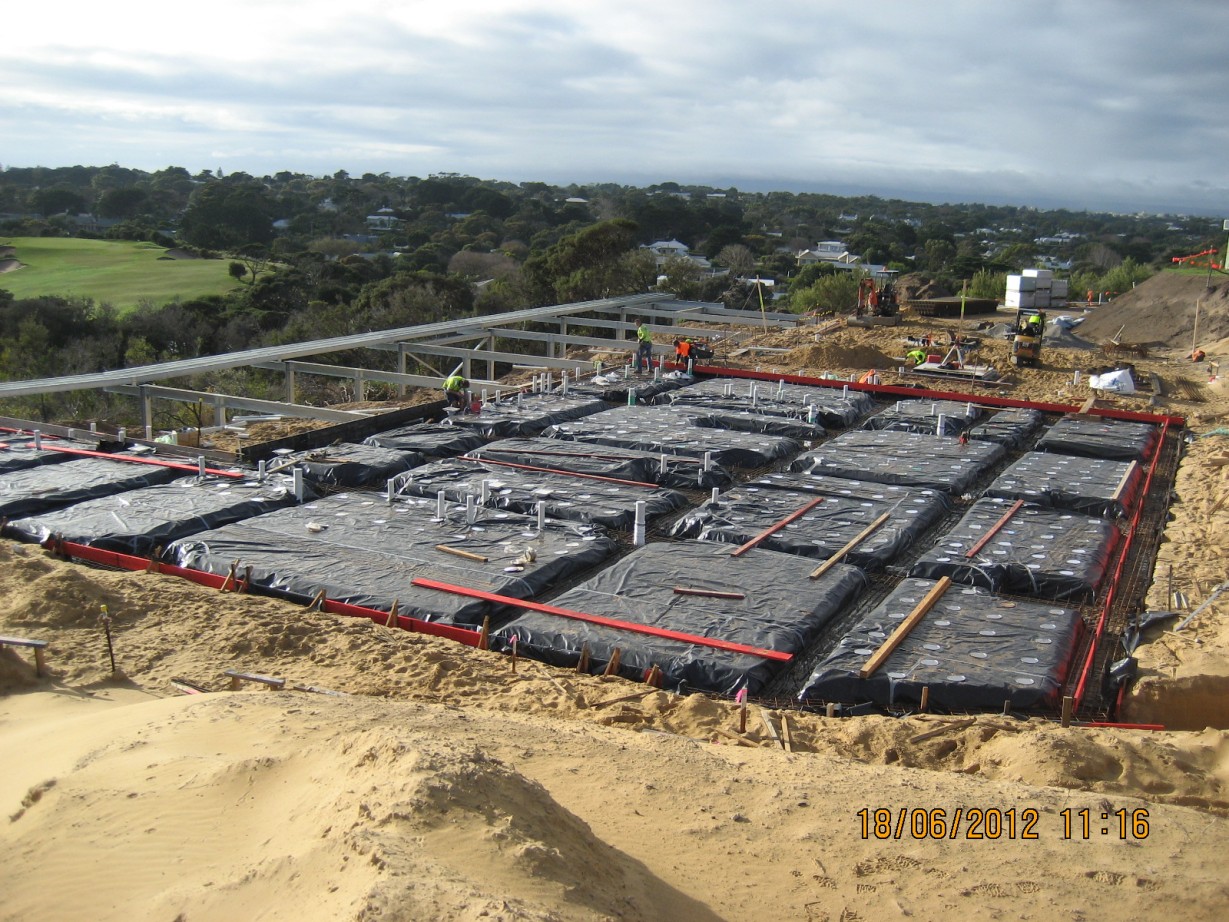
Buxton Construction was awarded the job, and the first sod was turned by Cannon on April 16, 2012. By the time a certificate of occupation was achieved on May 15 the following year, Cannon was living in China having handed the presidency to Richards after business commitments demanded what would be a two-year stint away. “The club needed someone who was local and could do the heavy lifting and Taffy was amazing,” Cannon said.
The 13-month build came in at the budgeted cost of $12 million. Power’s 2013 report to the board hailed “the birth of the Mercure Portsea Golf Club and Resort”. The clubhouse was officially opened with a gala cocktail party in June 2013. The last two blocks of the subdivision sold only weeks before the opening.
A decade-long process had been exhaustive and, for the people in the middle of it, exhausting. Those at the coalface were spending an average of 30 hours per week on the project while still working full-time. Friendships were strained, some lost. Duffy had spent Christmas with a fellow member for years, but was never invited again. Board members’ vehicles were keyed in the carpark.
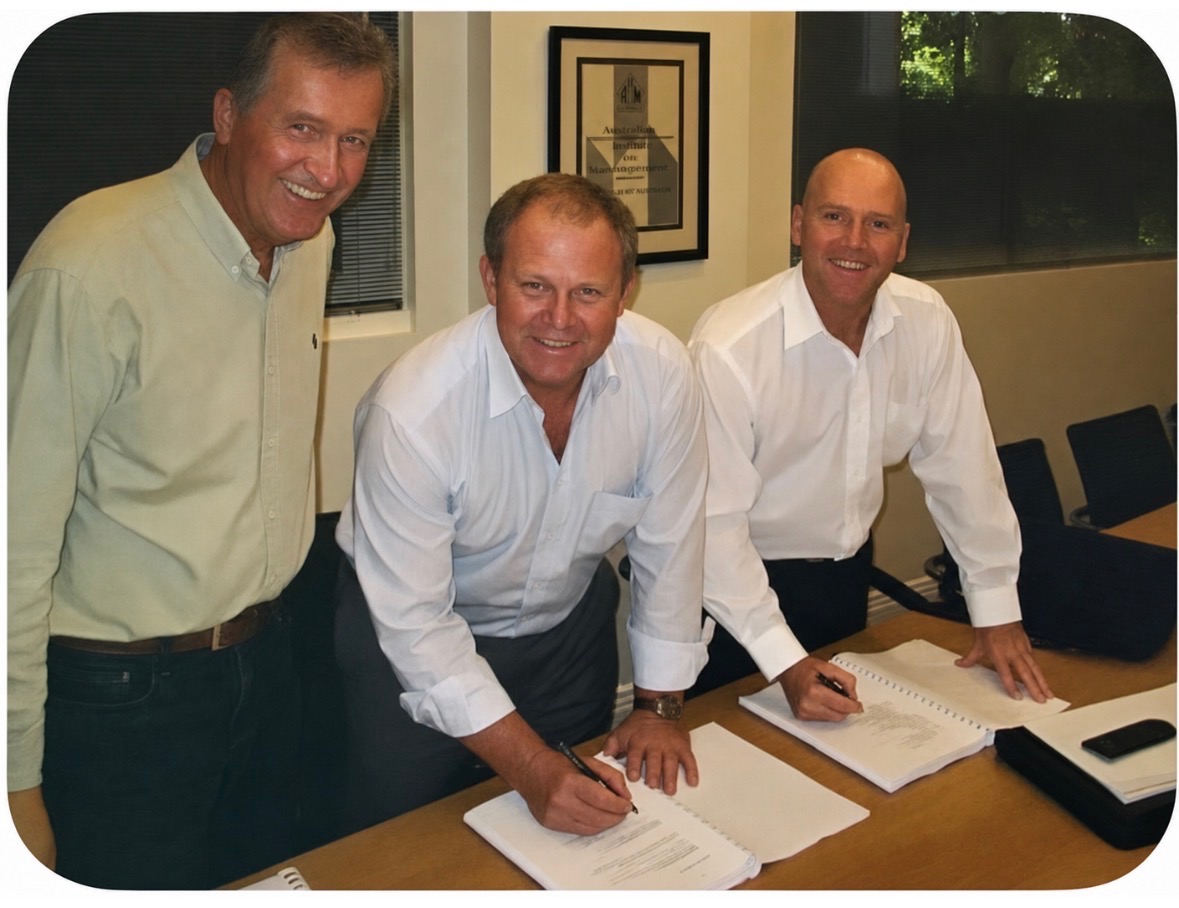
Michael Power, Keith Coghlan and Paul Cannon
There were uncomfortable meetings as the minority opposed to the development made their feelings known. Many who contributed untold time and expertise did so against a backdrop of busy lives. Pope, for example, had more than three decades of experience in industrial relations, having consulted to both State and Federal Governments of both political persuasions. He was running his own consultancy during the land sale and clubhouse negotiations and spending three days a week at the golf club. It might have been tempting to him and others to walk away. “No, never,” Pope says. “I’m always up for a fight.”
He flew back from Norfolk Island for the opening, Duffy flew down from Port Douglas, and with Richards, Power, Coghlan and other key redevelopment players they raised several glasses to Portsea’s future. “It was a huge celebratory night,” says Pope, who with Jenny stayed downstairs in the new accommodation. As did Power, Coghlan and Richards – at least for a while.
“My room had a noisy pipe running through the ceiling,” Richards says. “I got up in the middle of the night and went home! It was a new building – teething problems. But it was a great celebration.”
After 87 years spent in two clubhouses, Portsea had a bold new stage on which to strut its stuff. There have been regular tweaks since the opening, including $300,000 spent upgrading furniture and furnishings in the bar and new carpet in the bar and dining room. New deck furniture was purchased along with umbrellas. Younger members have been heard to claim Portsea deck beers are the best beers you can have.
A further $500,000 will freshen up the hotel foyer and accommodation, with the Board working towards bringing greater functionality to a space that is asked to be more of a jack of all trades than its predecessors. The business plan for the new building extolled the financial virtues of hosting weddings. A dozen years into its existence weddings have been scaled back and members given priority.
This agreeable approach has been possible because Portsea is thriving, happily able to prioritise being a golf club as its ‘one wood’.