


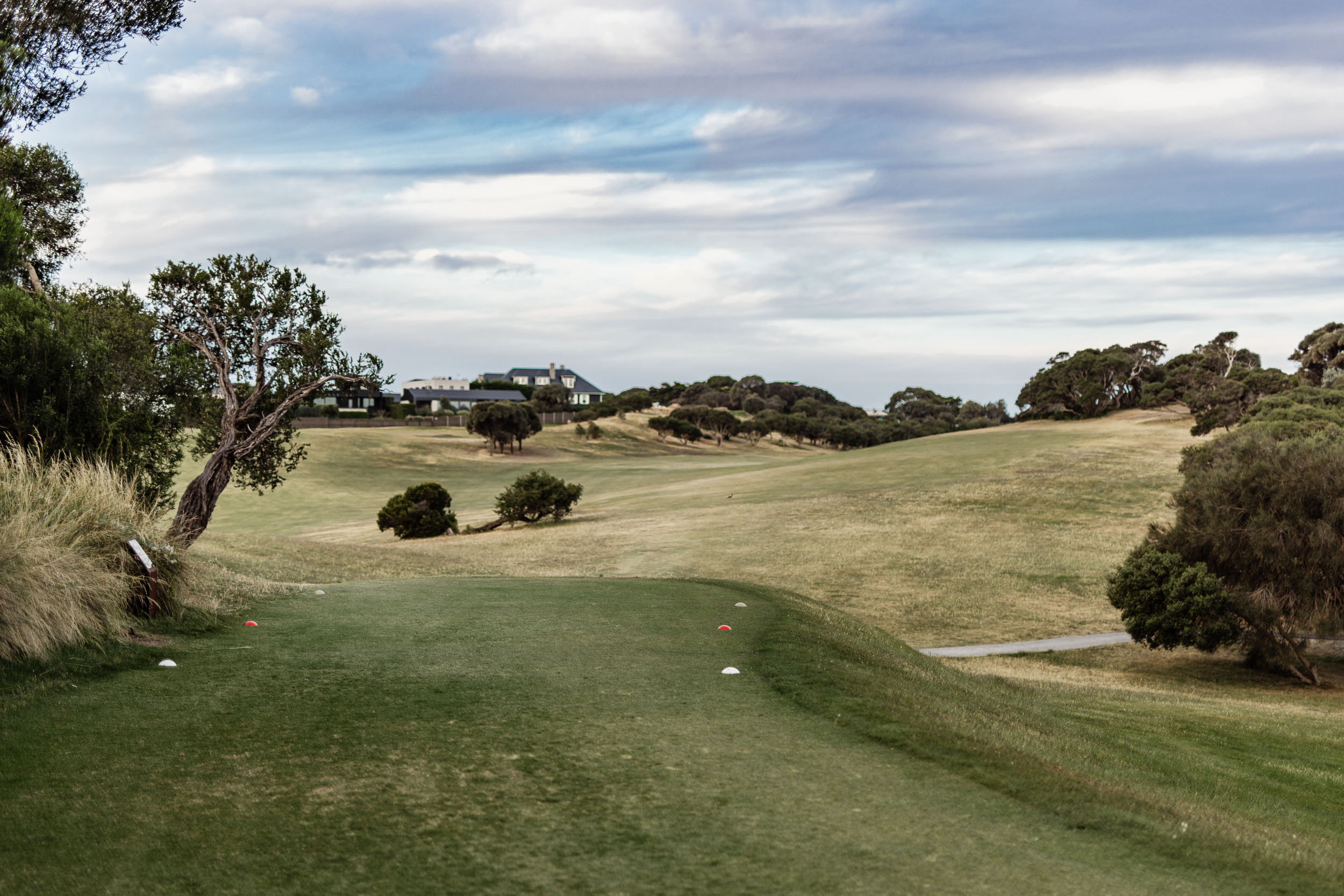
If Portsea to Mike Clayton was love at first sight, the course has been akin to an old flame sweeping in and out of his life. He won the Portsea Pro-Am twice and after competing on the European Tour transitioned into course design and went into business with John Sloan and Bruce Grant.
Grant was a Portsea member and pennant player who did his greens-keeping apprenticeship at Royal Melbourne under the doyen of golf course managers, Claude Crockford. When Grant became course manager at The National in its early years he hired Wilson as an apprentice. In the early 1990s, Grant’s Scotch Grange company was contracted by Portsea, and he sent Wilson there to show Lynch and the team how he ran a golf course. “He wanted to make sure The National and Portsea were working to the same sort of model,” Wilson says.
By then Brad Harris was working under Lynch at Portsea, making a name for himself both in preparing the course and playing it. “By the late 1990s we were at 12 o’clock and Sorrento was at 6 o’clock,” Harris says metaphorically of an overall improvement influenced by myriad factors, including over-sowing fairways with Santa Ana Couch and Grant bringing the greens back to an elite standard.
Santa Ana only arrived in Australia from the United States in the 1980s, in hessian bags of sods. “Being a hybrid you can’t produce it by seed – the seed is stagnant,” Harris says. “It went to turf farms and got multiplied, scarified and put on golf courses.”
Grant was initially employed as a consultant before taking on the ground staff as Scotch Grange employees. He had a stubborn streak not uncommon in masters of their craft. His nickname was ‘Hard Green Grant’, after his penchant for modelling greens on Royal Melbourne – so firm that no shot could mark them.
When Clayton returned to Portsea in the 1980s after a lengthy stretch away he recalls being shocked by a decline in the greens.
“That was before Bruce took over. He smashed them with chemicals and killed them, got the bent grass back. And they were brilliant.”
In the way of changes that humans foist upon nature, Harris says improvement didn’t happen overnight. He praises the committee of the time for backing their superintendent and his staff, investing in walk-behind mowers that helped turn the greens around. A change of fertilizer was another factor, along with winter grass control and regular dusting applications.
Life member Syd Thomson remembers Grant taking a hardline approach to the broader-leafed coastal fairway couch before replacing it with Santa Ana. This nearly caused the ageing Jack Howard to blow a gasket.
“He was ranting and raving, ‘Never poison grass!’” Thomson says. “I said to Bruce, who used to call me Dad, ‘I hope you know what you’re doing.’
“And he said, ‘It’ll be right Dad, don’t worry.’
“After about eight weeks the (Santa Ana) couch was coming up. Jack said to me, ‘I apologise Syd – this bloke knows what he’s doing.’ And everything Bruce did after that, Jack would be by his side.”
Wilson remembers sitting on the back of a tractor with Grant’s wife Mary, feeding sprigs of couch through PVC chutes into disc-sliced openings in the ground. It was a one-fairway-at-a-time process; after a growing season to establish, the new fairway could be scarified and the collected sprigs fed into the next fairway. Many Portsea members helped and rightly have an extra spring in their steps as they walk the fairways today.
Returning the course to an indigenous landscape was another Grant passion project, most notably through the removal of cypress trees that had been introduced in 1932 by Arthur Relph – which Jack Relph regarded as “the worst thing my father ever did at this golf club”. Grant was a disciple of Crockford’s mantra on trees – that they should never encroach into the course architect’s intended line of play.
In his ‘Course Comments’ column for the ‘Links’ newsletter in autumn 1986, Grant wrote: “Portsea golf course, as seen by the persons charged with the daily maintenance, are forever looking to improve such a brilliant piece of golf country and are mindful of promoting healthy turf for optimum playing conditions. Also, the preservation and planting of indigenous flora is high on our list of priorities.”
Taffy Richards remembers asking Clayton one day what could be done to improve the 18th, now the 8th hole. “Get rid of those $%#! Cypress pines!” was the typically forthright response. Richards was captain at the time, and gave Clayton and Grant the nod. “The next day I turned up and they were nearly all gone,” Richards says. “They left two on the corner, and they only came down in 2024.”
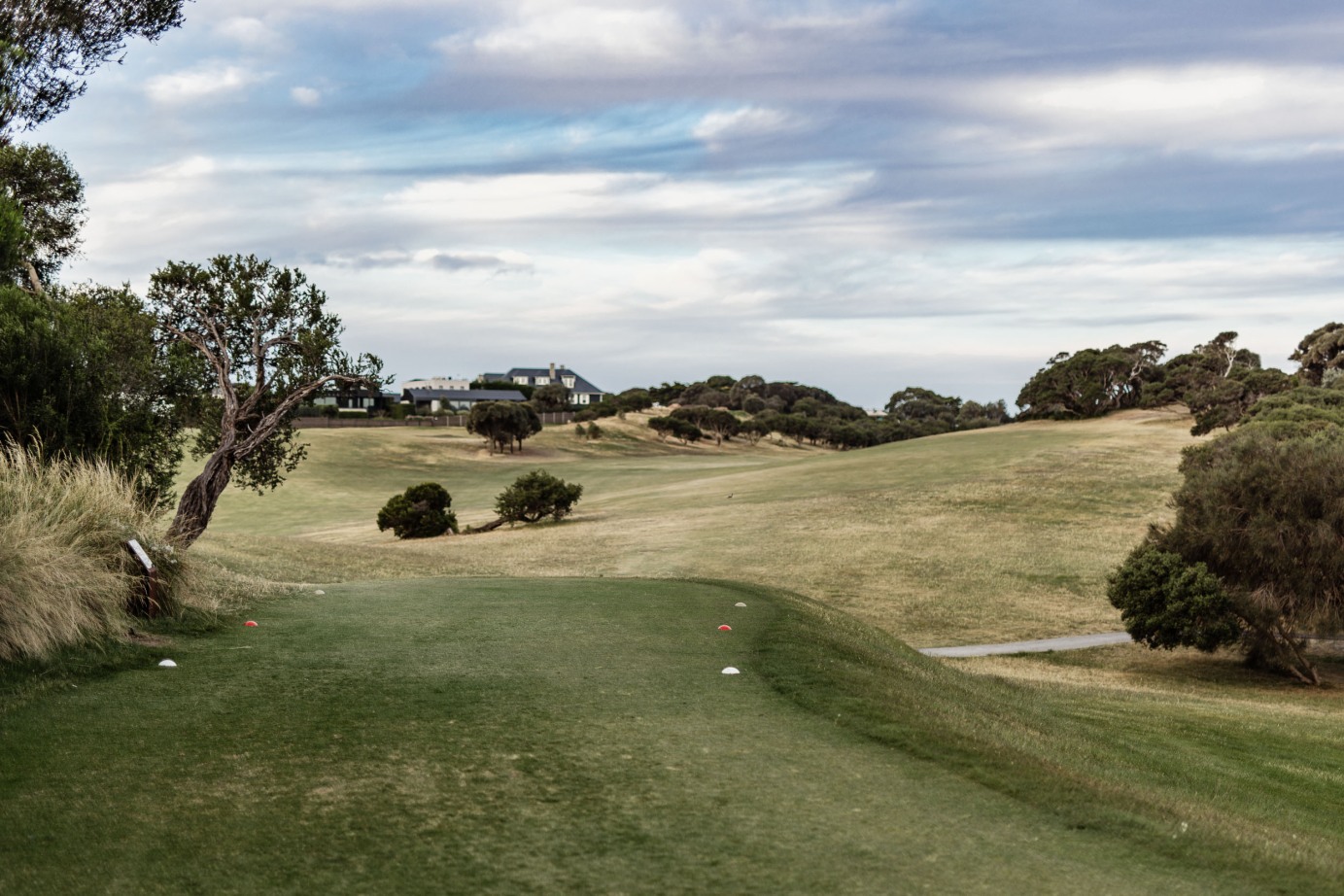
Harris laughs at the mention of the Cypress trees, which were disposed of via a bonfire adjacent to Delgany. “We used to get big couches and put them around the fire, buy pizza and beer, and I’d stay there all night to make sure it stayed under control.” One infamous night it didn’t – Grant set the pile alight, the wind changed, and flying embers burned holes in the Delgany pool cover. The club paid for a replacement.
Bunkers have been another enduring wrestle. Contemporary thinking around golf’s most renowned hazard includes a shift away from the visual drama of mass bunkering. Clayton favours a tempered approach to sand. CDP Golf filled in 65 bunkers across Yering Meadows’ 27 holes in 2024, while the Clayton/Mike DeVries-designed 7 Mile Beach near Hobart features 11 bunkerless greens, relying instead on natural contours to provide sufficient challenge around the putting surface.
Augusta, Clayton says, was “MacKenzie in the Depression on acid” – building wild greens with very few bunkers. “And then he died.” In Australia, the sandbelt offered a MacKenzie-inspired template that Clayton likens to the old tale about Mary having red hair and a temper giving rise to the theory that all redheads have a short fuse. “’Royal Melbourne’s a great course, Royal Melbourne’s got lots of bunkers, therefore all good courses have lots of bunkers.’
“But don’t put bunkers out there just because they look good. We’re all realising they’re unnecessarily onerous for average players, and you can make more interesting golf for good players by giving them options. The problem (at Portsea) is, Bruce Grant built such good-looking bunkers.”
Grant was responsible for many bunkers on the old course at The National, refining shaping skills with bunker guru Barry Hudson. At Portsea, Harris says he brought “sandy splashes and tongues that would catch the eye”, shifting from the grass-faced bunkers Harris had laboriously trimmed with a Flymo as an apprentice. “When Bernie said go and mow the bunkers you’d think, ‘Jeez, I’ll get a sore back here!’”
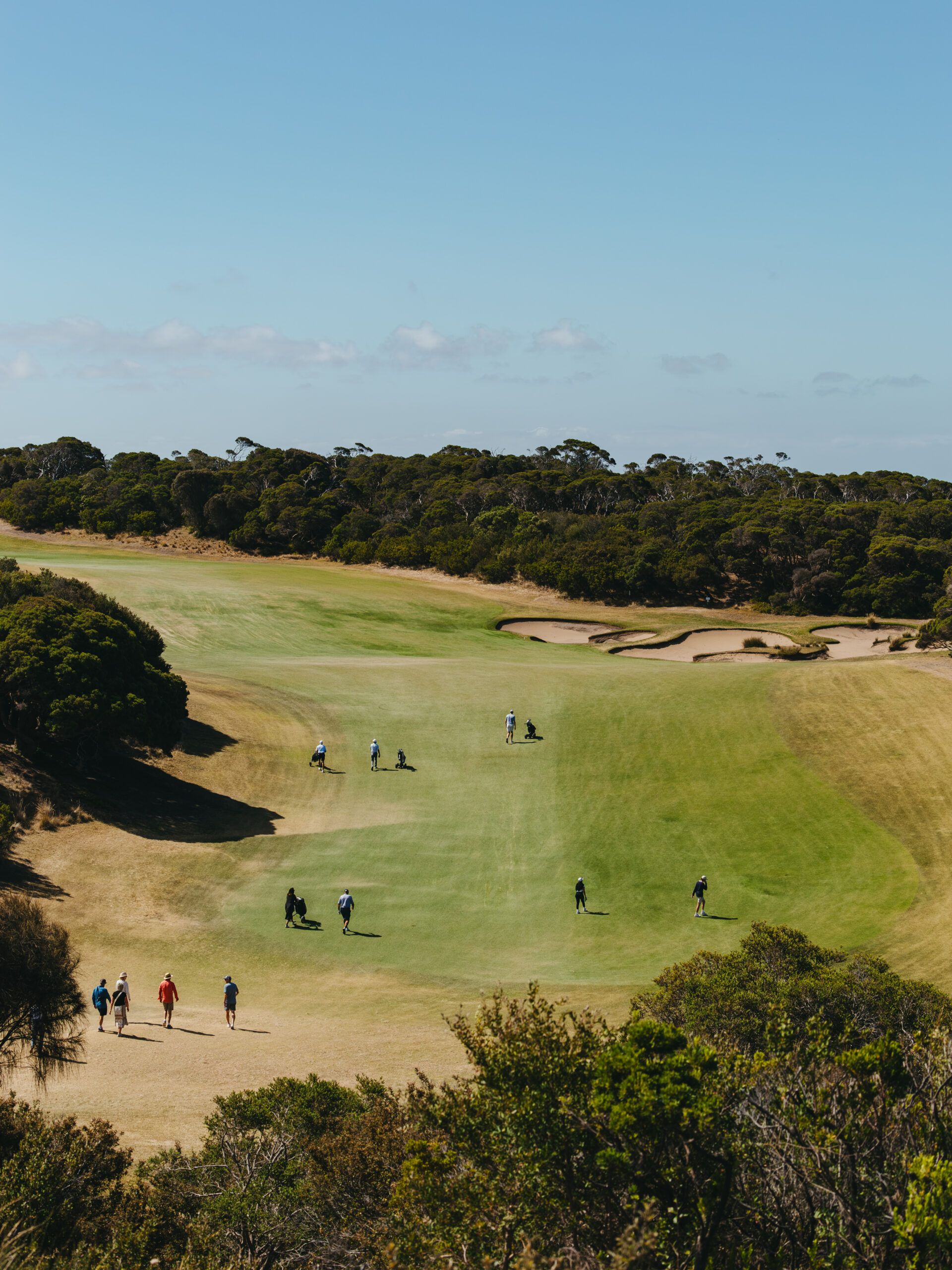
3rd Hole Bunkers
The drive bunkers on the 3rd, which Wilson notes look “stunning from the tee”, exemplify Grant’s contribution. Yet for low handicappers, golf-tech advances of the 30 years since they were built have rendered them redundant. “Good golfers just sail over the top of them,” Wilson says. “They affect the member golfer now more than the good golfer.”
The first – shortened to a par 4 to make way for the clubhouse – is another example. Bunkers that were a threat to second shots can now be avoided short off the tee, and still leave only a wedge to the green. “We try not to remove bunkers for the club golfer, because it’s got to be interesting for the club golfer to play,” Wilson says. His input to Clayton and the designers on all things has a maintenance focus. “If it means we need an extra mower, or extra staff for the upkeep of an area, I’ll give my opinion.”
Thomson attests that bunkers have come and gone across Portsea’s first century, or been moved during re-routings as holes have grown or shrunk. Greens have had a similar existence. When work began to put a dogleg into the straight 6th hole, for example, the contractor who was brought in to build the green found there had already been one on the new site. “I got onto Jack Howard and he said, ‘That’s where I put the green,’” Thomson says. “Sloan Morpeth made him move it, so we put it back where Jack had put it.”
Andrew Colliver only came on committee at Portsea because of his interest in the golf course. A builder, at one point he worked on Grant’s house. Over a beer at the end of the day they would pore over photos and documents detailing hole renovations. “My ideas on the course I would like to think reflect Bruce’s knowledge, from so many years playing with him and talking about the course.”
Colliver and others walked the course and then played it with Michael Cocking when he returned to audit an OCCM review that can be revisited over time, depending on need and finances. It’s strength is that many recommended improvements can be undertaken by course staff – minor changes to bunkers done in-house, for instance, areas that benefit from clearing, changes to mowing lines, fairway edges, etcetera.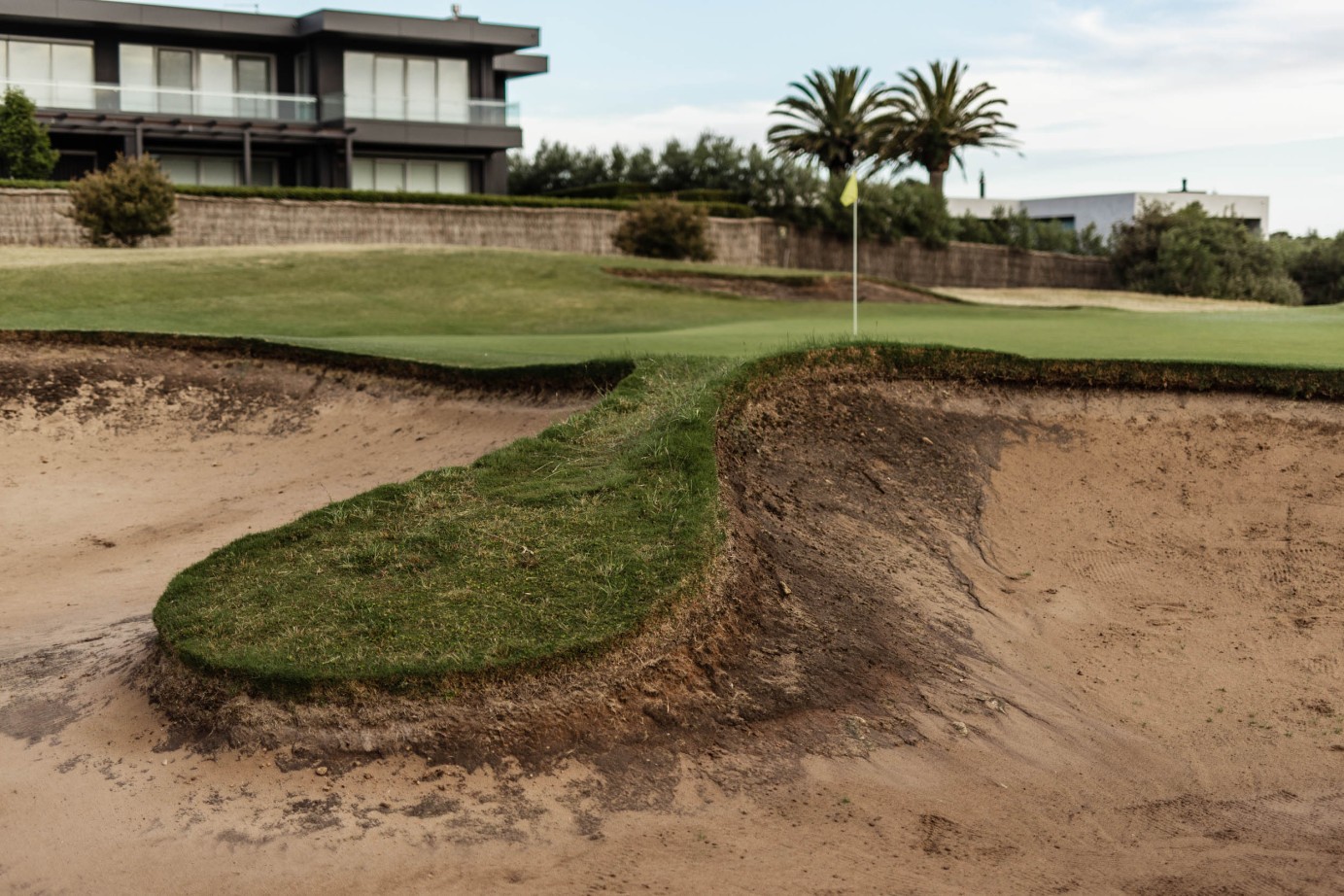
For Colliver, Portsea’s great allure is that it’s such fun to play. He recalls a former Kingston Heath captain, who is a member at Portsea, being asked which he would choose if he could only play one course for the rest of his days. “Kingston Heath has been No.1 in Australia,” Colliver says. “He chose Portsea. For various reasons. You go to some courses, even highly-rated new ones, and think, ‘That was fun, but I don’t need to go back for a while.’ We play here three days a week and never get sick of it.”
It’s some task to find a Portsea person who disagrees. Lawrence Heraty lives in Noosa now, but in the 1980s he and wife Donna lived in the original clubhouse while he was Portsea administrator. A former tour caddy who was on Bob Shearer’s bag when he won the 1982 Australian Open, the native American is in awe of what Arthur Relph, Jock Young and many others helped create.
“It really is just the layout of it – an absolutely fabulous, fabulous golf course,” Heraty says. “You had to do everything pretty well – you had to drive well, your irons had to be good, and if you missed the green your short game had to be good. It was just an absolute pleasure to walk around – the vibe, the feeling, the scenery, to hear the ocean …”
Philip and Craig Jewell concur. The veteran brothers who have walked Portsea’s fairways for more than half of the club’s existence recall seeing two men on the 5th tee during the 2025 Portsea Pro-Am, with a tripod set up to film and take photos. They’d been sent by Ian Baker-Finch to record what the 1991 British Open champion regards as one of the best second-shot courses around.
Of course, there is always room for improvement. After the 2013 move to a new clubhouse, attention turned to addressing the course’s most enduring need – water – chiefly via the installation of an underground irrigation system. As Colliver noted, no other course that regularly featured in lists of Australia’s top 100 was burdened by such antiquated watering practices. “Always, the vision was we needed to get the irrigation in.”
In 2024, that vision was realised. Click here to read the water story.