
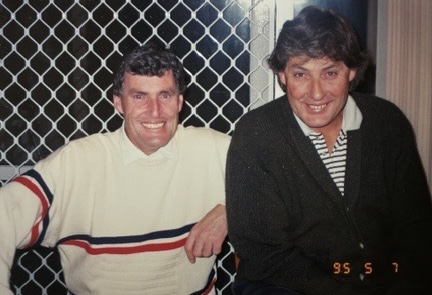
A constant in Philip and Craig Jewell’s lives has been the joy of playing golf together at their beloved Portsea Golf Club – two brothers, at ease in the company of each other and their partners of the day, relishing the enduring challenge of trying to improve on last time.
Philip is older by two-and-a-half years, and remembers their first round like it was yesterday. It was a busy afternoon at Ivanhoe and they had a long wait to play the back nine. “Craig was such a little fella, he was absolutely exhausted when we got home. Our mother was very cross with our father for making him spend such a long day on the golf course.”
It was the first of many, every one of them treasured.
When their mechanical engineer father joined Green Acres in Kew in 1960 his sons tagged along and became sub-junior members. By the late 1960s their parents were looking to build a holiday house at Mt Martha or Dromana. Fortuitously they kept driving to Portsea, glimpsed an almost-overgrown ‘For Sale’ sign, and bought it over the phone that night.
“When Dad discovered the golf course was here it was $50 for a full member and $25 for a junior,” Craig says. “The course being here was the real impetus for them building the house.”
Philip’s recall of the course circa 1969 (just four years after the layout was extended to 18 holes) betrays love at first sight. “The first nine here was the most outstanding nine holes of golf you could play: great challenge, beautiful layout, the quality of the course was perfect. The greens were table-top firm – you could not make a ball mark in them, and they putted beautifully, slick and fast.”
With a self-deprecating laugh that’s always close at hand, he adds: “Everything was better in yesteryear.”
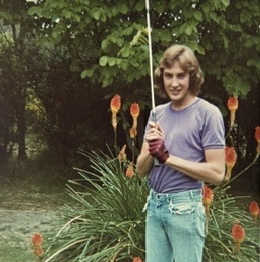
Craig practicing in their backyard in Balwyn in the late 1960s
The Jewells present an endearing contrast – Philip rakish and accustomed to speaking to an audience after a four-decade career as a barrister; Craig less imposing, happy in the shadows, an unlit cigarette passing from hand-to-hand hinting that being interviewed isn’t his favourite pastime. Yet both are great company, and full of stories about the sporting love of their lives.
Like Craig’s stint as a professional, the genesis of which he describes in typically understated fashion. “After floundering around for a while I did a traineeship at Kew Golf Club then Rosanna, and became a full member of the PGA in 1979.”
Under the old Youth, Sport and Recreation scheme he took clinics at schools, and with a close friend ran the public course at Mt Martha. “A really nice time. Very long hours, but it was good.”
Philip adds important context. “Craig’s being a bit modest. He was playing the Australian tour – South Australia, New South Wales, Queensland – and was doing well. He had an eyesight problem that made it too difficult to keep pursuing a playing career.”
Craig never had a coach, learning only from observation, “and always with great support from Mum and Dad and Phil”. His pro experience confirmed how incredibly hard sport at the elite level is, and what playing for money can do to people. “I’ve always enjoyed the game, and probably enjoyed it all the more for being with people who were friendly. When people are a bit on the nasty side it can be off-putting.”
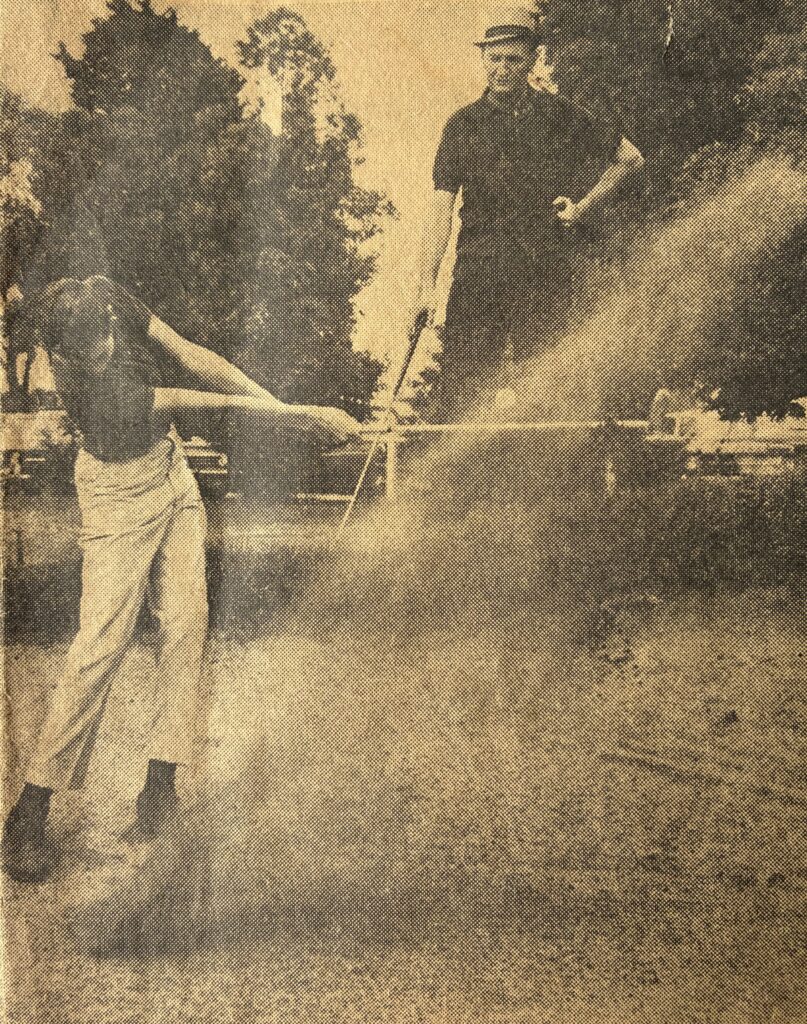
Father Frank watching Craig practice out of a bunker in 1967
Philip picks up the story of Craig playing the Tasmanian Open with two professionals from NSW, who did all they could to intimidate him throughout their round. Being grouped with the great Kel Nagle in the West Lakes Classic in Adelaide provided a warming contrast.
“I’d seen him play since I was only this big, Dad used to take us to all his tournaments,” Craig says. “And he was everything I’d heard about him.”
Spike marks were a constant irritation in the day, and you weren’t permitted to tap them down if they impacted your line. Whenever Craig had a putt through pock-marked terrain, Nagle would quietly tap down any marks that were in his line. “He’d do it for me without saying anything. He was so friendly and helpful, so courteous.”
In hindsight Craig knows he didn’t have the laser-like single-mindedness to make it as a professional, having always played golf for love over all, never in pursuit of fame or fortune. He missed pennant golf terribly, and made up for it in spades after regaining his amateur status by playing pennant for Portsea for many happy years.
This celebrated form of the game has given the Jewell brothers untold joy, from junior days at Green Acres, on to the club’s senior pennant team, at Portsea and, for Philip, through a treasured 25-year stretch playing pennant for Royal Melbourne. Success in the club’s centenary year of 1991 marked the perfect time to bow out.
The famous sandbelt course’s allure had gripped him when their father took them to see Peter Thomson and Gary Player contest the 1963 Australian Open, and two small boys squeezed to the front of the gallery to watch legends in action from almost touching distance. “Seeing Royal Melbourne that day I thought, what a magical place, how could I be part of this?”
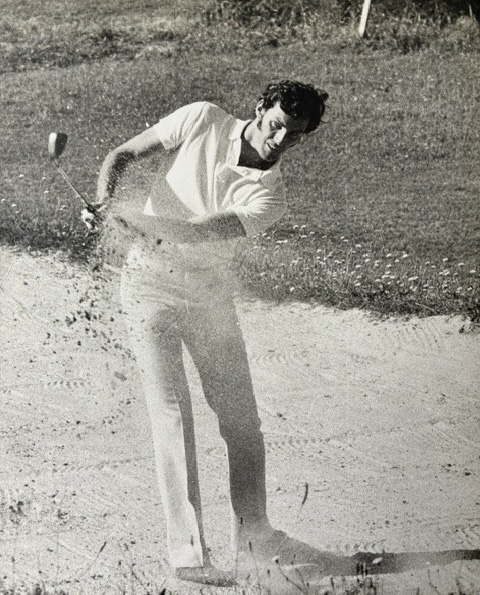
Philip at Riversdale in 1974
Standing in the way of Philip’s yearning was a long-standing Royal Melbourne stance of not being seen to recruit members primarily to bolster their pennant stocks. But two factors were in his favour. “I was proposed by a long-standing member who had pedigree at the club.” He adds with a laugh. “And I was in the right profession.”
His love of pennant golf, at Royal Melbourne and Portsea, is in the same realm as his brother’s.
“I think it’s because you’ve got pride in the club itself, that’s a big factor,” Philip says. “You like to think that in some way you’re helping with the club’s reputation, it brings the club up. And of course when you achieve something as a group there is a human bond that exists between those people.”
Into the second half century of their Portsea golfing lives, the Jewells have continued to do amazing things. In 2023, aged 70, Craig won the club championship. Philip wonders if he created a record in doing so, “if anyone has won their club championship anywhere in Victoria at that age”. Craig shrugs and reflects that he’s always been a better match-player than stroke-player. “I don’t know why, it just seems to suit me.”
They’ve also teamed successfully in the Foursomes Championships while in their 70s. “That’s given me the greatest pleasure I’ve had in my golfing life,” Philip says.
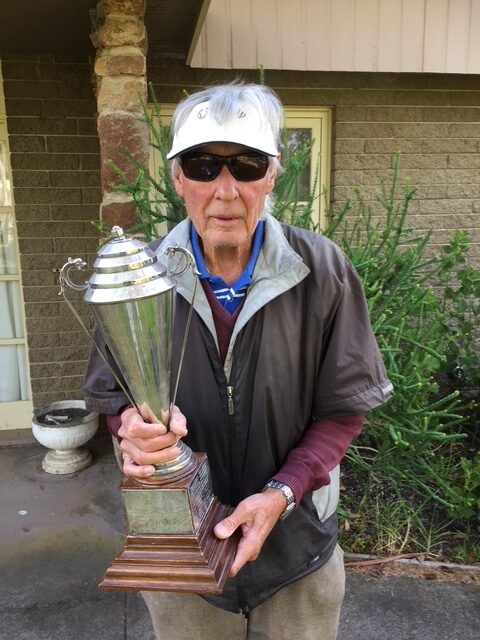
Craig winning the Club Championship at age 71
Not that it’s ever been about winning, merely taking part. Handicaps were important, if only because for much of their time as golfers they knew if their mark was five or better, they could enter pretty much anything. “That’s all we cared about – couldn’t care less if we were off five or scratch or one, as long as we were in.”
A quirk of Philip’s golf, which still brings gasps of shock when he plays with new members or visitors, is the glorious persimmon woods he will never give up. “I’m a stubborn traditionalist, that’s the explanation for that,” he says, adding that it’s part of his nature in all facets of life. “I’ve still got old tools, old mowers, everything’s old. If I could have an FX Holden I’d probably have that too.
“I just don’t believe golf should have gone that way. I’m not going to go that way just because everybody else has.”
Arthritis in both wrists made lighter, modern equipment the only option for Craig. But golf’s power-hungry evolution, which has rendered many great holes around the world near-obsolete, leaves him cold too. “If the same thing had happened in footy they’d be kicking goals from centre half-back. And then they’d have to pull the MCG down and make it bigger. Where would it end?”
Philip laughs that the ageing process “hasn’t got a lot to say for it”, as golfing fundamentals like coordination, balance and strength wane. “But as Craig said, there’s still the mindset that I can improve on what I did last week.”
Their bond is delightful. It seems fitting to sign off with each describing the other.
Philip on Craig: “Craig is a self-taught golfer who has developed a swing and technique that’s very sound. And he’s got the best short game I’ve seen of any golfer, anywhere. He middles the ball and just doesn’t make a mistake, that’s how he plays.”
(Craig: “I wish that was true!”)
Craig on Philip: “Phil in his young days, when he was in the junior state squad, there was a terrific fella called Peter Mills there. He nicknamed Phil ‘Whiplash’ – he had a fast swing. He was strong and a long-hitter – for a long time he had the record for the longest hole-in-one in Australia, on the seventh at Green Acres when he was 17. A par 4, a few different ways of playing it, and he knocked a 4-wood into the hole. Phil had great distance combined with really good accuracy.”
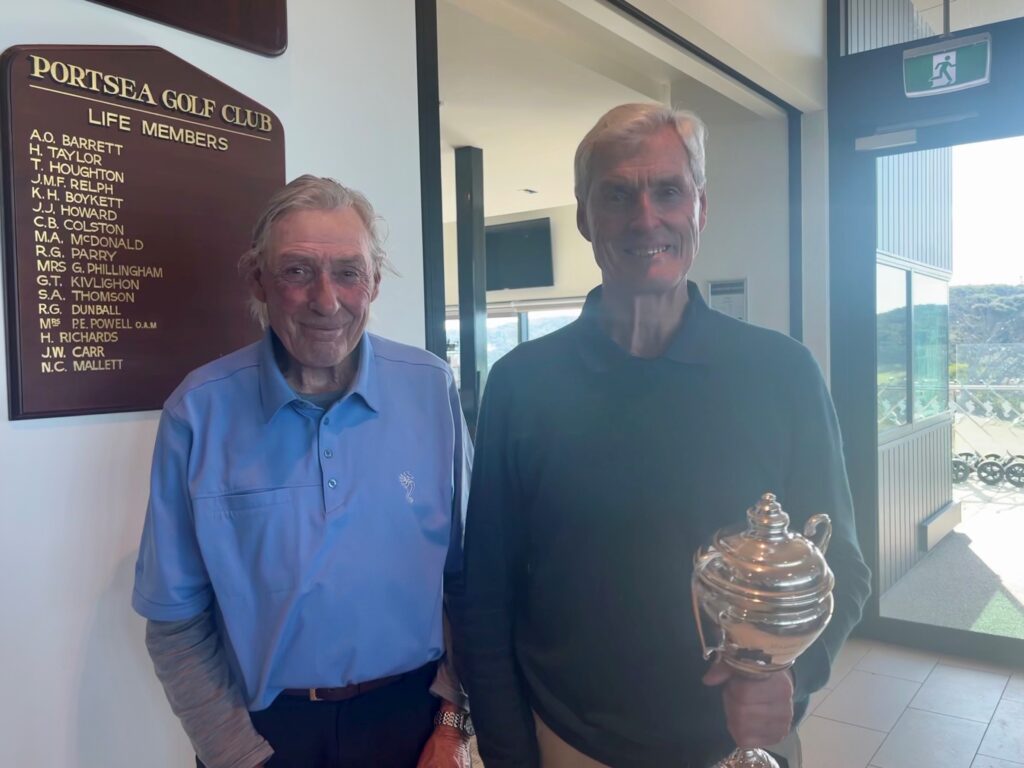
All of which fires a tantalising thought: imagine how good a hybrid of the Jewell brothers could have been. They laugh heartily.
“Sometimes I’ve wondered that,” Craig says. “I’ve wondered if we had just been one instead of two …
“But of course we wouldn’t swap anything.”