
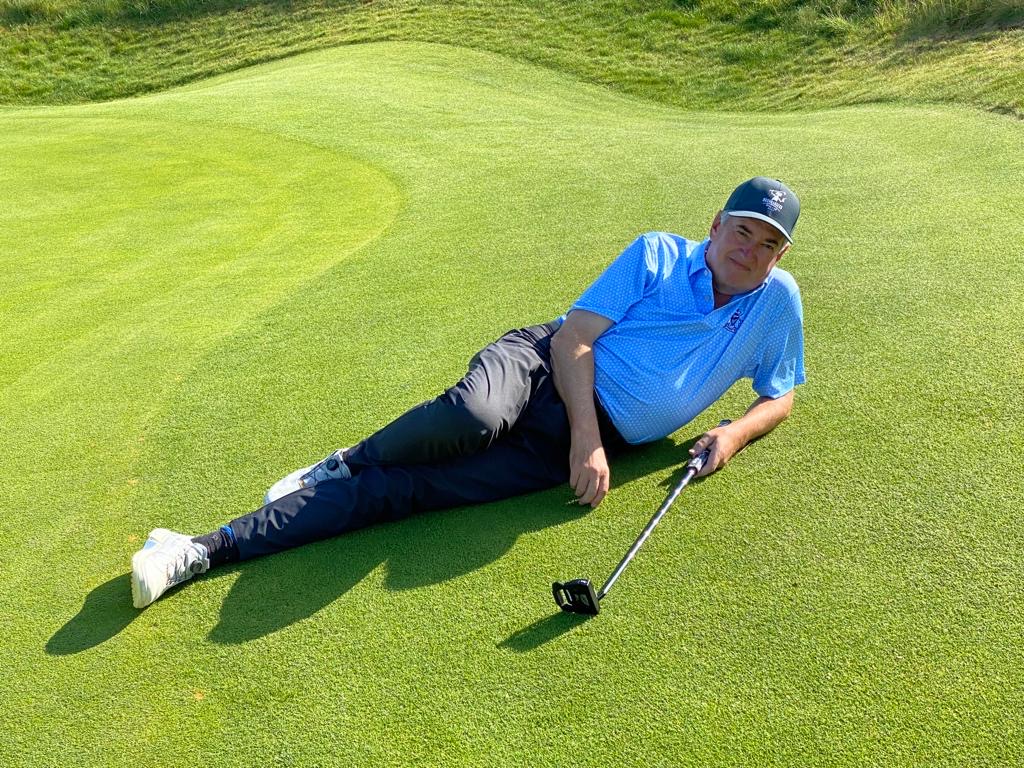
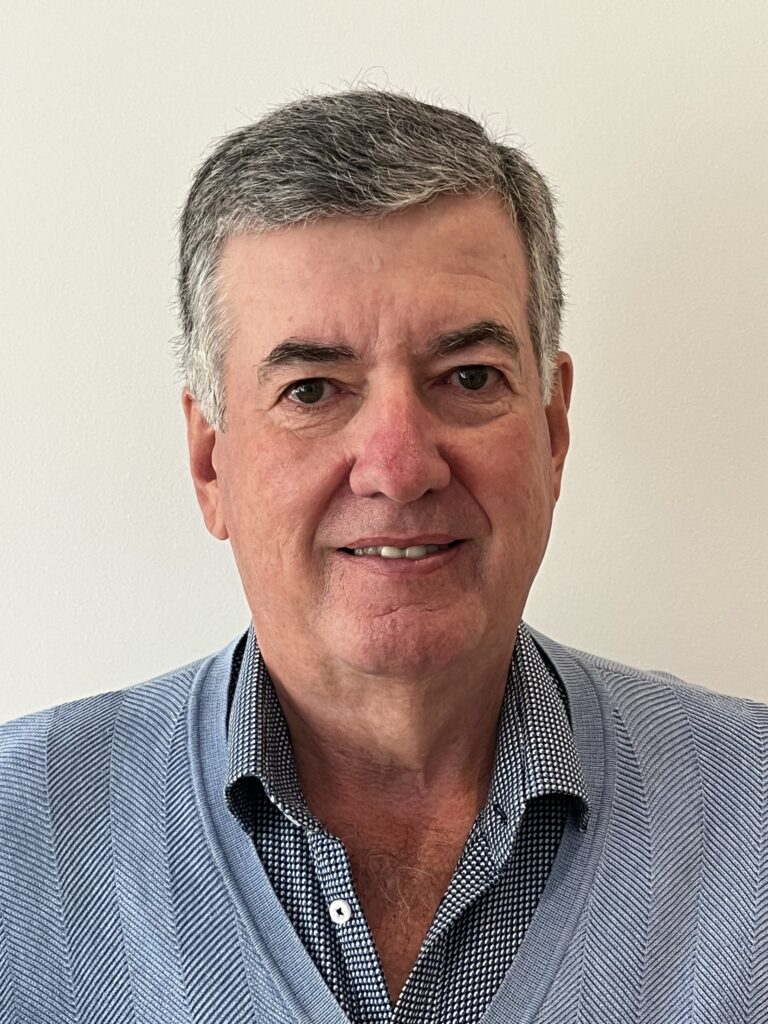
Portsea folk who know him as a natural storyteller might be surprised to find that Rob Worthington and public speaking weren’t always a perfect match. A relatively shy young person, it was golf that awakened his inner raconteur.
“They made me captain of the Kingston Heath junior pennant team and I had to get up every week and talk,” Rob says.
When he embarked on the first of effectively three 10-year careers, working as a retail consultant with Target, he would routinely deliver briefings to 100 staff. Joining a wine club meant still more talking to an audience (albeit with something on hand to steady the nerves if required).
“In my early 20s I had to learn how to talk and be comfortable with public speaking and that just kept developing. I remember all my speeches, I don’t need notes. I’ve always had a capacity to remember things.”
The earliest entry in his golfing memory bank is of the eight weeks Rob and brother Graeme spent living with their Uncle Neil and Aunty Barb when he was seven while their parents were overseas. Uncle Neil would later be club champion at Riversdale and practised after work every day.
Within a fortnight her nephews were driving Aunty Barb bonkers, so for the rest of their stay they accompanied Uncle Neil each evening and he taught them to play golf. By the time their parents came home their boys were hooked; golf clubs topped each boy’s wish list that Christmas.
When Rob was 11 his parents bought a house at Sorrento. He and Graeme enjoyed sailing, fishing and taking their boards to the surf beach. But if it was a golf day – at the old Sorrento Downs course their block backed onto, or Sorrento or Portsea – nothing else mattered. “We would play at all of them depending what day of the week it was. Invariably our parents would drop us in the morning, pick us up late afternoon and we’d play 36 holes of golf.”
A Christmas in their mid-teens delivered their first Portsea membership, gifted by their grandmother because it was more affordable than Sorrento. Rob’s game developed quickly and he was soon in the junior state squad.
At 16 he won the B-grade championship, edging out an esteemed opponent who would become a good friend – Syd Thomson.
“Syd didn’t like being beaten in a play-off by a young whipper-snapper, and it’s safe to say he’s never forgiven me!”
A couple of years later, in 1979, he entered his first Club Championship as top qualifier and favourite but lost 5 and 4 to Alan Bullas. Rob can still recall every shot played that day, and resolved to work his backside off thereafter to match Alan’s far-superior putting. “Forty-plus years later I’m still trying to work out how to improve my putting and fulfil my potential.”
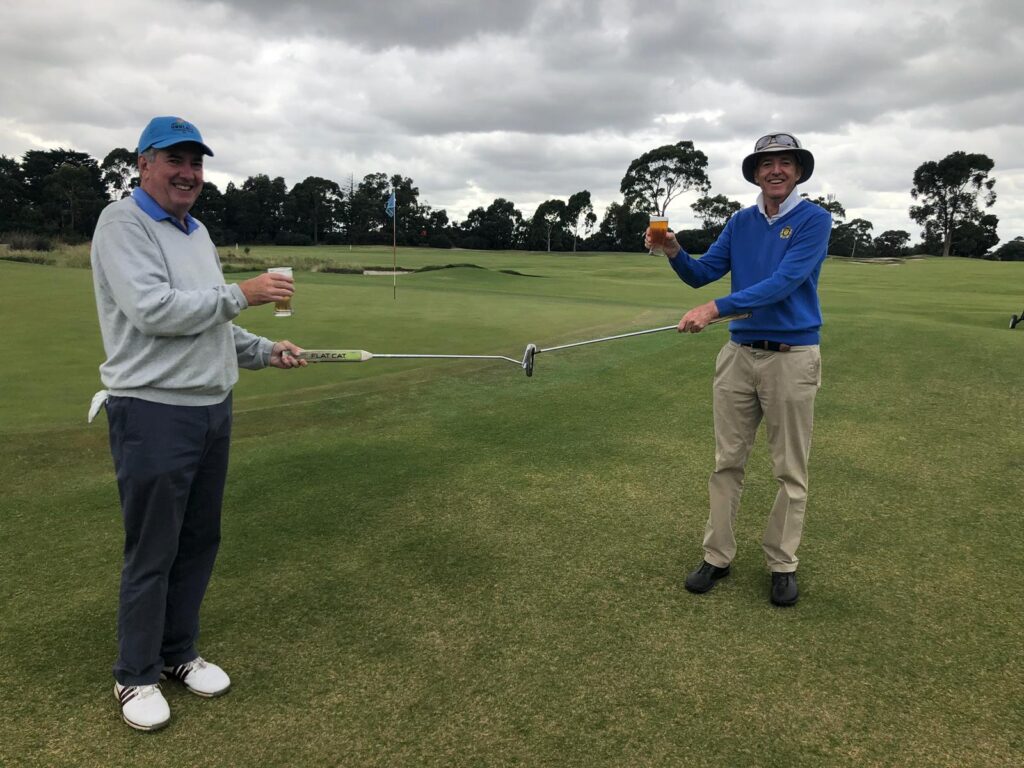
His best golf years came at around 21, when he got down to 3 when the handicap system was less-forgiving than today. “I was very much part of the furniture here until 27, 28. Then after the kids came along I was only playing 10-to-12 times a year – I wasn’t getting too many leave passes for weekend activities!”
His career-in-three-parts featured consultancy work for boutique firms and large department stores, helping troubled businesses right themselves. Full of variety, he did retail strategy for Melbourne Zoo and designed the stamp museum when it came to Melbourne. Career two was taking over his late father’s data collection business which centred on large-scale educational testing programs such as NAPLAN.
“Then I bought a wine auction house.”
Specialising in back-vintage super-premium sales and high-end storage in controlled environments, it played to a passion that makes Grange a staple at every Worthington family Christmas. Rob certainly doesn’t turn his nose up at Australia’s most revered red but reserves a special place in his heart (and cellar) for French wines.
“Pinots and Chardonnays are my Achilles heel in terms of the financial commitment. I’ve got about 1500 bottles floating around just so I don’t get thirsty.”
When he retired aged 51 Rob was off 11. The first year his mark came down to 7, the next year 5, then 4. “But I don’t think I was as good then as when I was playing off 3 or 4 – under the old handicap system every card mattered.”
Having been a member at Portsea, Sorrento, the National and Kingston Heath he knows golf clubs and what they mean to people. He was on the Kingston Heath committee for a decade, had a stint as captain, and was heavily involved in hosting a World Cup and putting together two President’s Cup bids. The latter was successful in securing the 2028 event.
Rob says his view of life isn’t complex, extending to his take on golf clubs – which for all their differences are bound together by their members’ love of the game.
“I don’t get this ‘culture is different’ stuff. The culture is, love your golf, love your clubhouse environment, interact with the staff, be among friendly faces, sit down and have a chat. You’ll gravitate towards like-minded people – play with the same group of people, sit in roughly the same spot. There are smaller groups within clubs but all clubs are the same.”
Pennant golf has provided his most treasured memories with its transformation from an individual game to one where you play for your teammates. Rob reckons the Ryder Cup is the best sporting event in the world; pennant offered a hint of its magic. “If you can be the one who creates the 4-3 victory and not the 3-4 loss …
“And then there’s the social aspect of course, coming down the night before, meeting up with people, having a good night. Then you play, then it’s post-game. The whole team, the bonding between players.”
In Rob’s eyes there have been three real heroes among the many huge contributors to Portsea’s centenary – those with the foresight in the 1960s to acquire the land to extend from 12 to 18 holes; those who acknowledged the club’s struggles in the early 21st century and boldly built the current clubhouse and hotel; and the global pandemic.
“The upshot in popularity of golf since Covid is amazing and the flexibility of people’s working arrangements has seen a surge in members – this club has doubled its membership.”
He regards the club as healthier than ever, underpinned by a magnificent golf course which presents a challenge that never becomes tiresome. It is truly his happy place.
“There’s a degree of happy anticipation when you drive in the gate – I’m here to play golf today, I’m here to have a good time. Hopefully I’ll play well. I know it’s better than anything else I might want to spend my time on. You never know who you’re going to run into at the clubhouse.
“I think that’s why a lot of golfers live a long life – that social interaction. So good for mental wellbeing and all sorts of things. We get the exercise, we get the social interaction, hopefully we get some satisfaction from playing a few good shots as well.
“It means another happy day.”