


As he moves towards the curators’ 19th hole after a mighty contribution that stretches almost half a century, Bernie Lynch provides a tangible link to the men upon whose toil the Portsea golf course was built. By common consensus this gentle, hard-working man has done them proud.
In a single leap Bernie reaches back through the ages to Jack Howard, the legendary greenkeeper and life member who was referred to only as ‘The Boy’ until he turned 18, and who was an old man filled with wisdom and tales when Jim Suttie, President Col Colston and Captain Bob Roberts interviewed 17-year-old Bernie for a junior role on his staff in August 1976.
“Jim had been here for some time, and Jack of course was before him,” Bernie says. “He wasn’t working, but he was living in Sorrento and would still call in to the old machinery shed. ‘Can I borrow a nail?’ That type of thing. Each time he’d pop in you’d get a bit more history.”
Bernie’s story is avowedly local. His father was in the army and in the Korean War before moving from Puckapunyal to army housing in Durcell Avenue, Portsea with his wife and five children when Bernie was three. They lived outside the barracks, but it was their playground.
“You can imagine – gymnasiums, tennis courts, trampolines, the beach all to yourself,” Bernie says. “They’re my first memories.”
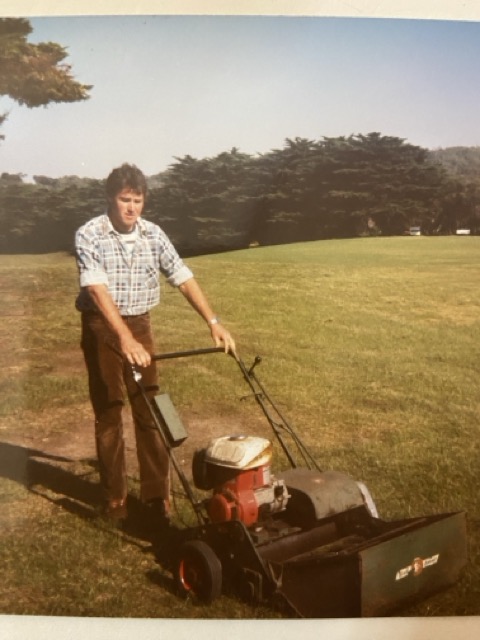
Bernie Lynch
Jobs were hard-earned. Billy Rhodes had a Portsea milk bar and a funeral home; young Bernie had brief stints working at both. When a family friend who worked for the nuns at Delgany mentioned they were looking for a young bloke to work on the golf course, a long and fulfilling career began.
There were three others on staff – Suttie, ‘Shorty’ Waxell and Ron Pearce. The latter two were ex-military; all three were much older than Bernie, who did much of the manual work. His catalogue of duties betrays that, technological advances aside, the particular challenges of growing and maintaining the Portsea course have been constant since Jack Howard was a boy.
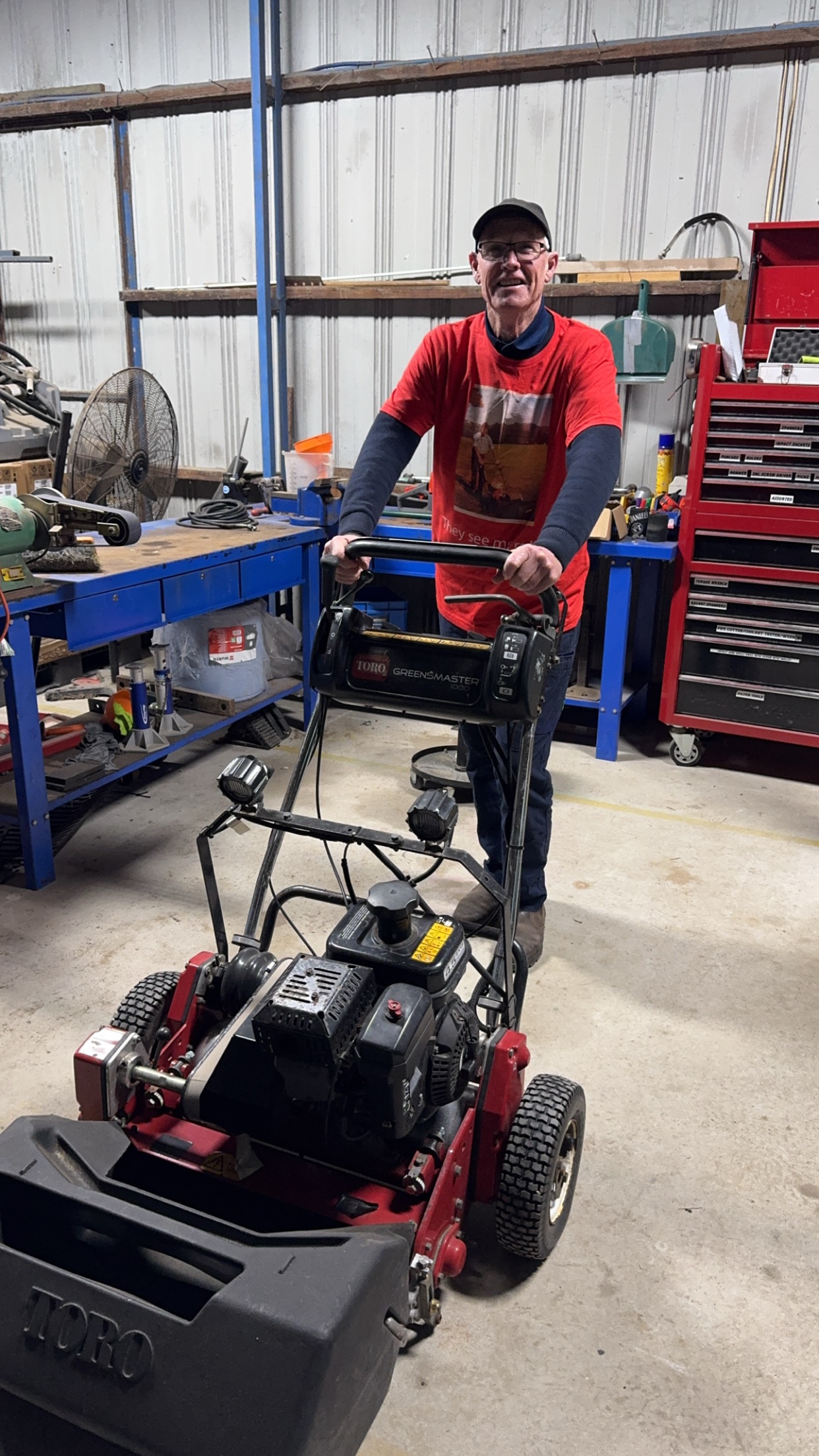 Like watering, which was all done by hand in Bernie’s early years and largely confined to tees and greens. A regulation shift was 7am-3.30pm, but in summer the junior would switch to night-watering – 6pm-midnight, five nights a week, the shorter hours compensating for their unsociability.
“I didn’t look forward to it, I’d have preferred to be out with my mates,” Bernie says, recalling that after 9pm the last couple of watering runs would be undertaken in the dark. Laughing, he admits, “I put the motorbike into a couple of bunkers.”
Portsea’s water conundrum would become a topic of fascination. Bernie’s apprenticeship included a two-year night course in Burnley that he would drive to after work twice a week, which brought some science and methodology to the greenkeeper’s daily graft. He came to know intimately how the course’s three bores would behave over a dry season. As reverse osmosis plants were introduced, Bernie took on the job of “shandying” down the salt-heavy bore water.
“The bores never ran dry, it was just that the salt content increased. The start of the season the salt level will be acceptable, but by March it’s high. We’ve got the facility now to do a shandy, but there were times in the past where we’d have to stop watering, you’d get a little salt crust on the surface.”
His philosophy is simple and environmentally sound: whatever you’re taking out, try where possible to put back. Ti-tree clearing was still a thing (though not at the volume faced by the course’s early attendants), and was still done mostly by hand. In an on-course nursery, moonah and casuarina seeds were propagated as replacements.
“We took a lot out, but we put a lot back in too. That’s your environmental responsibility.”
Weeds and disease were never far away, with polygala a regular greenkeeper’s headache. Bernie recalls spending days over the quieter winter period in amongst the ti-tree and moonahs hauling the milkwort out of the ground. Fairways were resown with couch sprigs, by course staff and members armed with screwdrivers who bored holes to plug the sprigs. Later a plough-like machine behind a tractor opened the ground for three “spriggers” to feed in the couch.
Rabbits and foxes have come and gone in cycles. Many more bunkers exist than when Bernie started, adding to the curators’ load when the wind picks up and blows the sand all over the course. “We’d do a lot of work to make the presentable, then the wind blows and they’re dry again.”
He’s enjoyed learning, has never felt like he’s fully cracked the golf course’s code, and welcomed acquaintances made and knowledge gained attending Australian Golf Course Superintendents’ Association workshops and gatherings. “That’s the best thing – a room full of people, you might get a little snippet that you can take away.”
Bernie feels blessed to have spent his working life largely among the elements. “It’s like any outdoors environment. We maintain a golf course, others grow. We grow grass.”
Knowing every inch of the course intimately makes choosing a favourite spot tricky, but he settles on the third tee, where before mobile phones and their ubiquitous cameras he would look through the low cloud, fog and winter sun at the tower of Delgany and think he had things pretty good.
He still has a soft spot, too, for where the old sheds were when he started, off Relph Avenue, where Jack Howard would pop in and tell his Portsea tales.
“It’s given me loyalty, wanting to stay,” Bernie says of the golf club. “And a great way of life.”
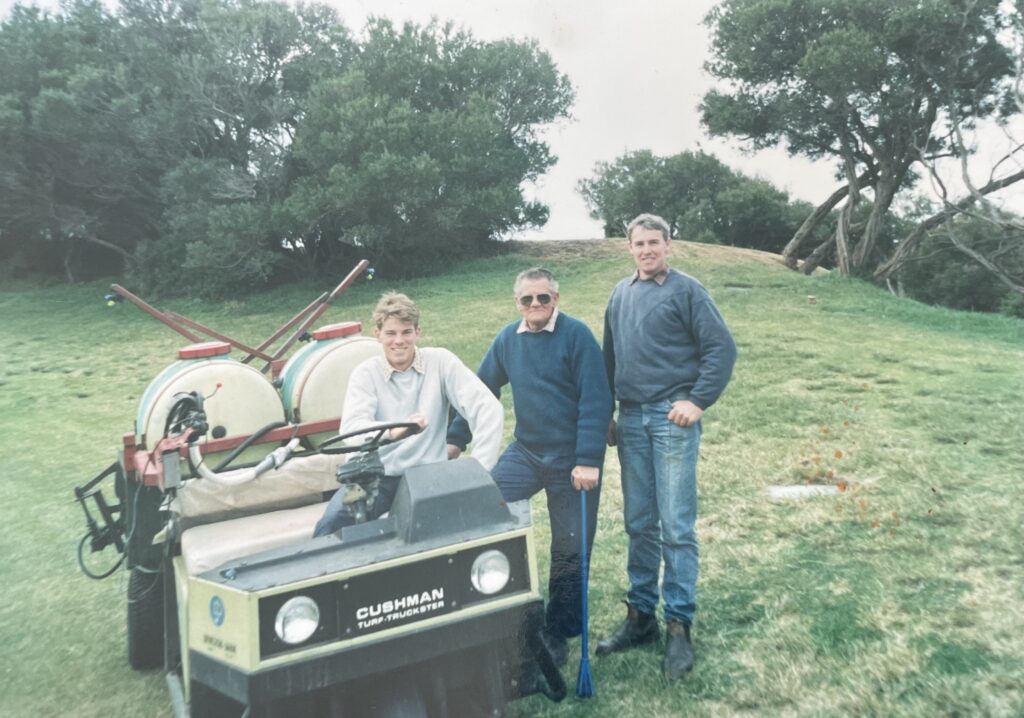
(From left to right) Brad Harris, Jim Suttie & Bernie Lynch.